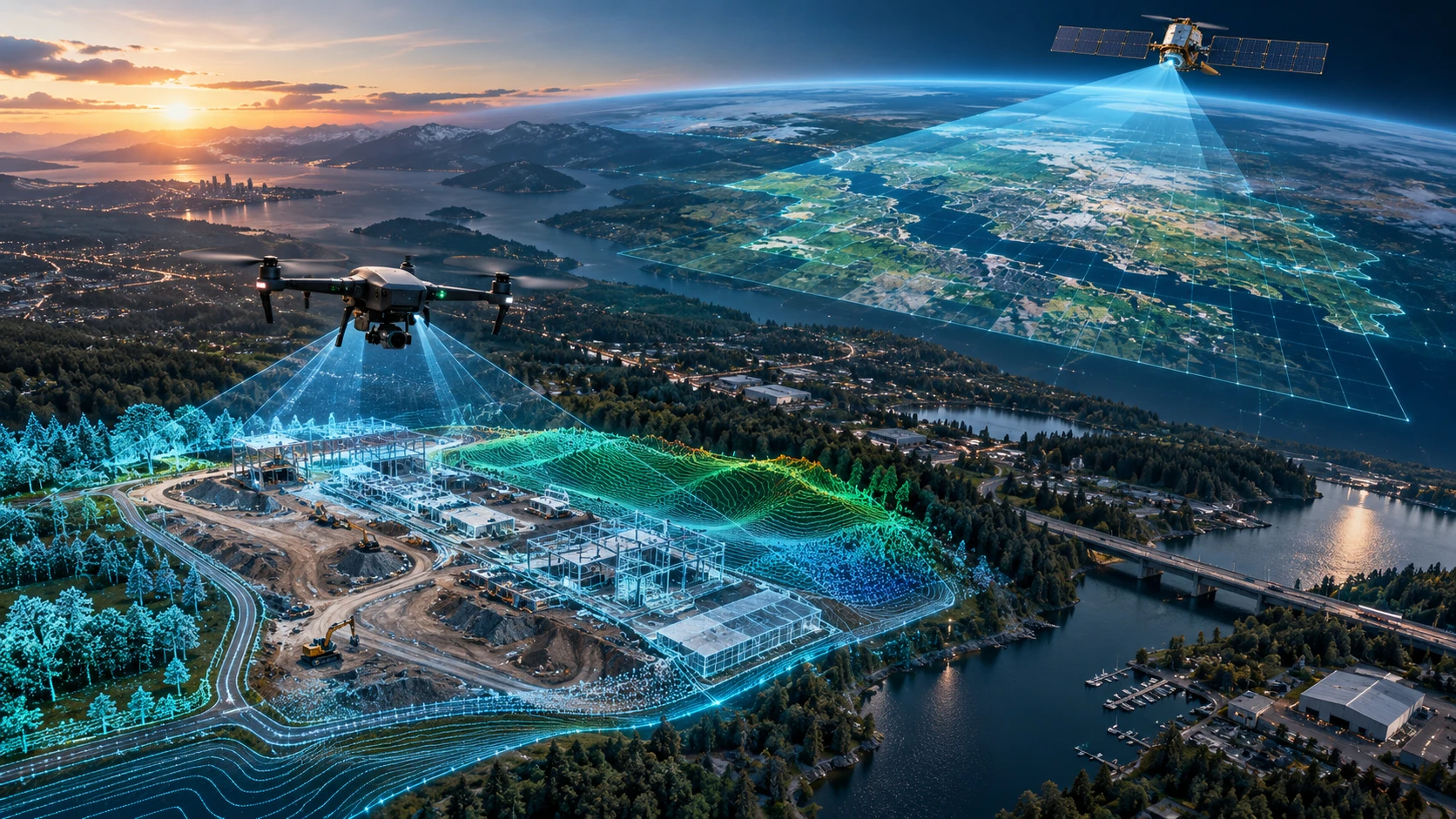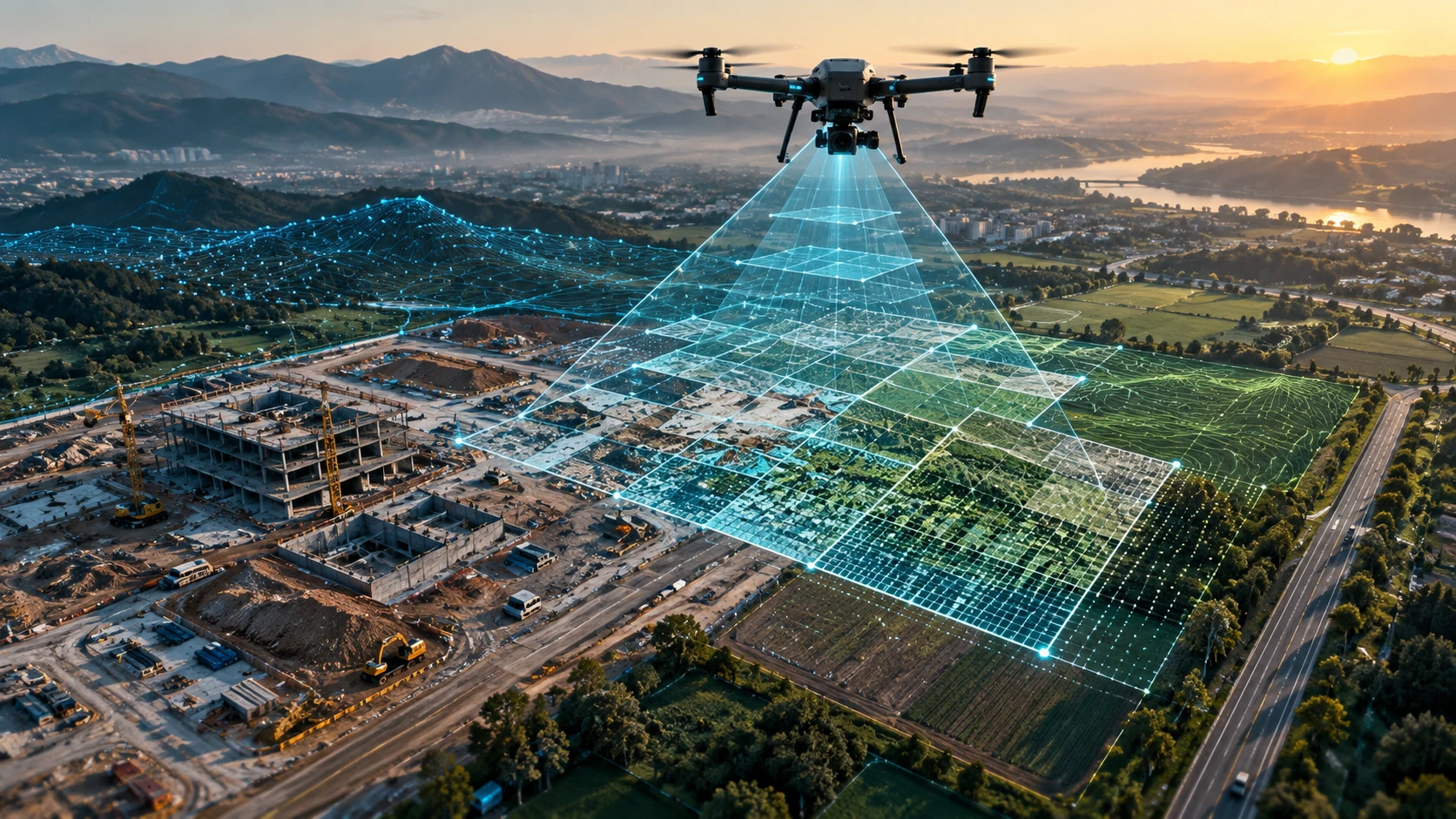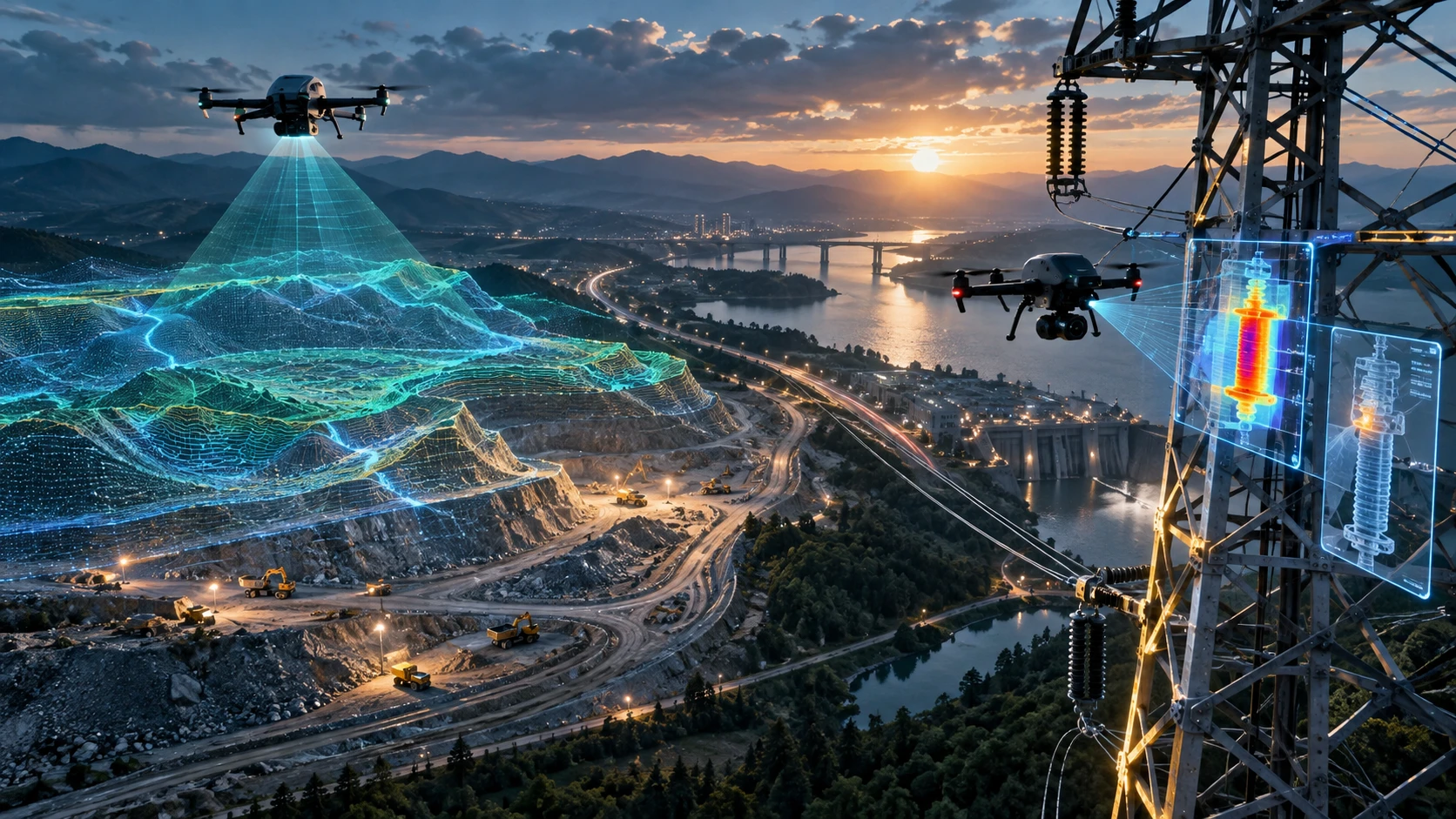
If you are planning to hire a drone service provider, you will hear terms like orthomosaic, DSM, DEM, contour and point cloud. Many decision makers are aware these deliverables are important, but not everyone knows what each one actually represents or how it is used.
An orthomosaic is a distortion free aerial map stitched from hundreds or sometimes thousands of high resolution drone images. It allows accurate measurement of distance, area and surface features because of its geo referencing.
A DSM or Digital Surface Model represents the height of everything the drone sees including structures, trees and built elements. This is useful for urban planning, solar studies and volumetric analysis.
A DEM or Digital Elevation Model is derived from the DSM but shows only the bare earth terrain without buildings and vegetation. This dataset is critical for flood modelling, drainage planning, water flow simulation and road or canal alignment.
A point cloud is a dense three dimensional dataset representing millions of real world points collected by LiDAR or photogrammetry. It provides a precise digital twin of the terrain and structures which can be used for CAD modelling, volumetric calculations or engineering design.
Contours are derived outputs that help represent elevation differences in a simplified form for planning and surveying.
Understanding deliverables helps clients evaluate quality and ensures that expectations match project outcomes. Drone technology is powerful, but its real value depends on how well the generated data is interpreted and applied.