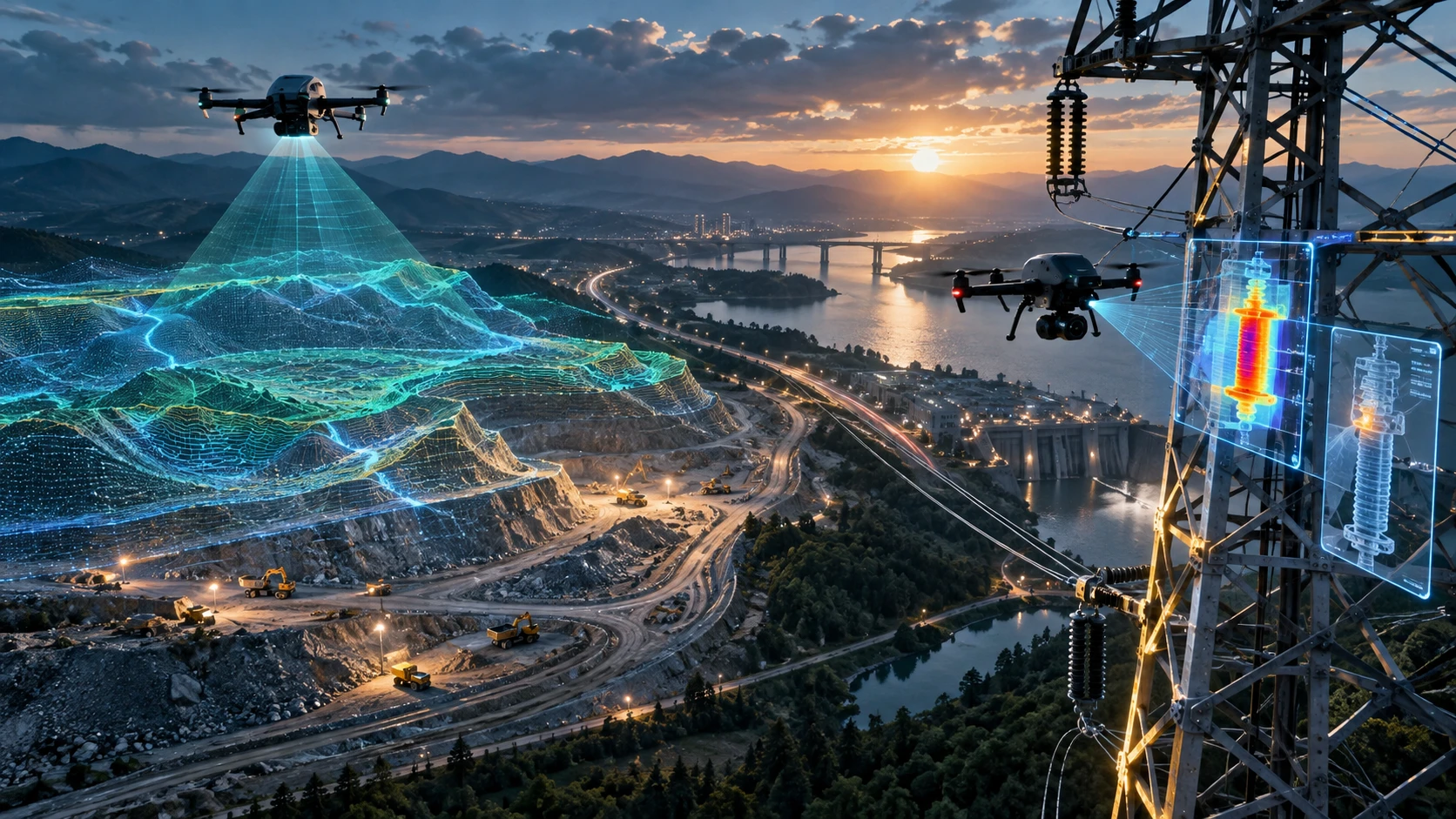
Thermal vs RGB drone inspection is an important comparison for project teams, asset managers, utility companies, solar plant operators, industrial facilities, and infrastructure teams. Both methods are useful, but they do not find the same type of issue. RGB inspection shows what is visible to the normal camera. Thermal inspection shows temperature differences that may not be visible to the human eye.
In simple terms, RGB finds visible surface problems. Thermal finds heat-related anomalies. When both are used together, inspection teams can understand not only what an asset looks like, but also whether there may be abnormal heating, moisture patterns, insulation gaps, equipment stress, or hidden maintenance risks.
This guide explains what thermal imaging finds, what RGB inspection finds, where each method works best, and why many professional drone inspection projects use both.
What is RGB drone inspection?
RGB drone inspection uses a normal visual camera to capture high-resolution colour images and videos of assets, structures, surfaces, and sites. It helps teams identify visible defects, physical damage, surface changes, and external conditions.
RGB stands for red, green, and blue, which are the basic colour channels used in normal digital imaging. In drone inspection, RGB cameras are useful because they provide clear visual evidence that engineers, maintenance teams, security teams, and managers can review easily.
RGB drone inspection can help identify:
- Cracks
- Rust
- Corrosion
- Broken parts
- Loose components
- Surface stains
- Vegetation growth
- Soiling and dirt
- Bird droppings
- Physical deformation
- Missing components
- Damaged panels
- Roof damage
- Structural surface issues
- Construction progress changes
RGB inspection is especially useful when the issue is visually visible. It is also useful for reporting because colour images are easier for non-technical stakeholders to understand.
Skyglimps Technologies LLP provides Thermal & RGB Inspections for organisations that need visual and thermal drone data for asset monitoring, defect detection, and preventive maintenance planning.
What is thermal drone inspection?
Thermal drone inspection uses an infrared thermal camera to detect surface temperature differences across assets, structures, equipment, or environments. It helps teams identify heat patterns that may not be visible in normal RGB images.
A thermal camera does not show normal colour like an RGB camera. It detects infrared radiation and converts temperature variation into a visible thermal image. Warmer and cooler areas appear differently depending on the selected palette.
Thermal drone inspection can help identify:
- Electrical overheating
- Solar panel hotspots
- Equipment heat buildup
- Moisture-related thermal patterns
- Insulation gaps
- Heat loss
- Wet roof areas
- Blocked or stressed components
- Abnormal temperature zones
- Mechanical friction indicators
- Thermal leakage
- Possible hidden maintenance risks
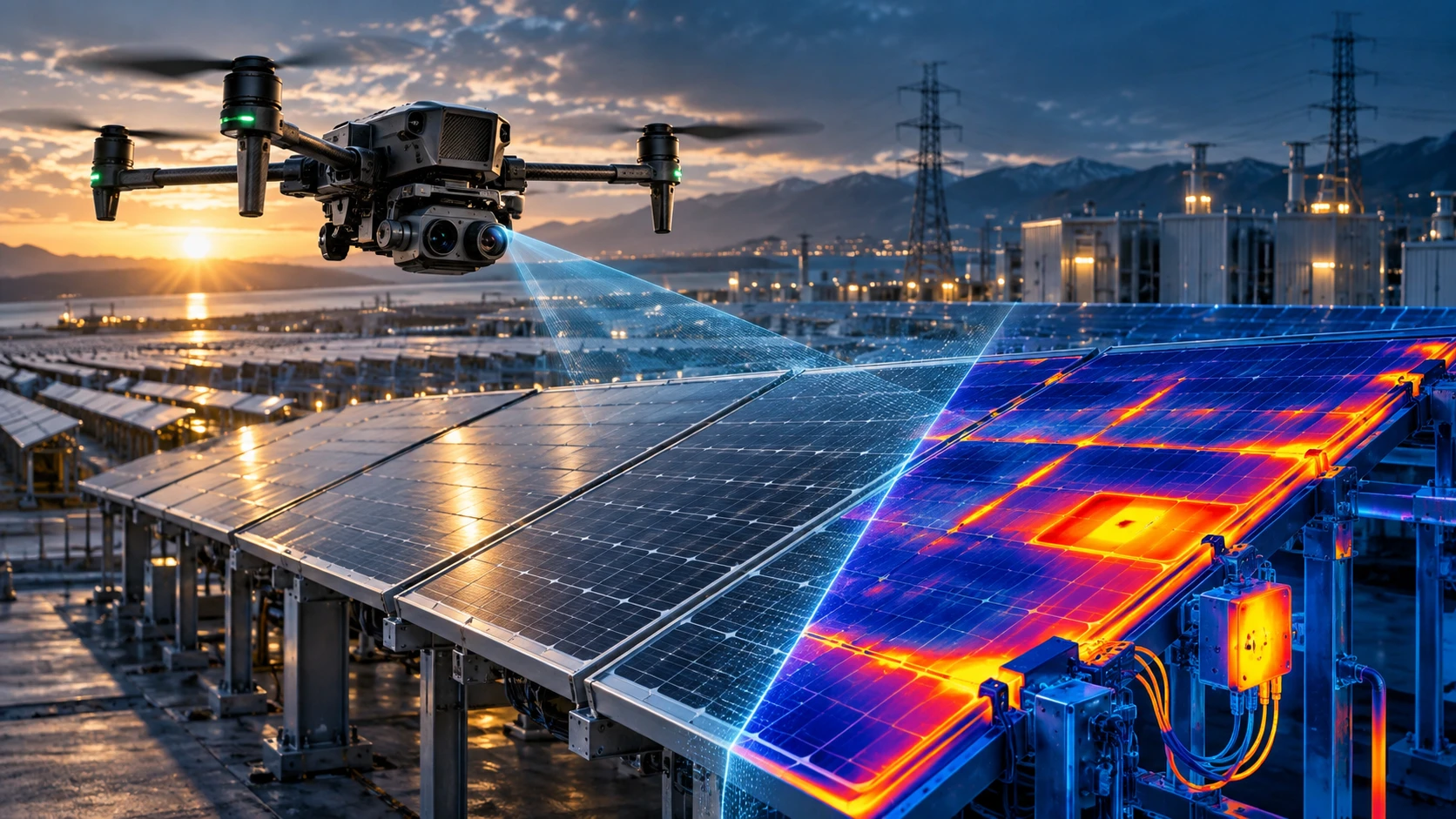
Thermal inspection is valuable because many early-stage problems do not look unusual from outside. A solar panel may look normal in RGB imagery but show a hotspot in thermal imagery. An electrical component may look clean but show abnormal heat under load.
What is the main difference between thermal and RGB inspection?
The main difference is that RGB inspection detects visible surface conditions, while thermal inspection detects temperature differences. RGB answers “what can be seen?” Thermal answers “what is heating, cooling, leaking, or behaving differently?”
A simple comparison:
| Factor | RGB drone inspection | Thermal drone inspection |
|---|---|---|
| Sensor type | Visual colour camera | Infrared thermal camera |
| Main output | Photos and videos | Thermal images and heat maps |
| Finds | Visible defects and surface conditions | Temperature anomalies and heat patterns |
| Best for | Cracks, corrosion, damage, soiling, deformation | Hotspots, overheating, insulation gaps, moisture patterns |
| Limitation | Cannot show temperature | Lower visual detail than RGB |
| Reporting value | Easy visual evidence | Strong diagnostic screening |
| Best use | Visual documentation and defect review | Preventive maintenance and anomaly detection |
Neither method is automatically better for every project. The right method depends on the asset, defect type, inspection objective, and final decision the client needs to make.
Which issues does RGB inspection find best?
RGB inspection finds visible issues best because it captures clear colour images of asset surfaces and surroundings. It is useful when the inspection question depends on shape, texture, colour, alignment, damage, or missing parts.
RGB is strong for identifying:
- Surface cracks
- Broken glass
- Rust marks
- Corrosion
- Loose fasteners
- Bent components
- Missing parts
- Roof damage
- Vegetation obstruction
- Bird droppings
- Dust accumulation
- Paint failure
- Structural deformation
- Water stains
- Construction progress
For example, in a solar inspection, RGB imagery may show cracked glass, soiling, dust, vegetation shading, bird droppings, damaged frames, or misaligned panels. In a building inspection, RGB imagery may show roof damage, wall cracks, drainage blockage, or visible surface deterioration.
RGB inspection is also helpful for location context. Even when thermal imagery identifies a heat anomaly, RGB imagery helps the team understand exactly which component, panel, roof area, or asset is affected.
Which issues does thermal inspection find best?
Thermal inspection finds heat-related issues best because it shows temperature differences that are not visible through normal visual inspection. It is useful when the problem creates a thermal signature.
Thermal is strong for identifying:
- Electrical overheating
- Solar panel hotspots
- Hot connectors
- Overloaded components
- Failing modules
- Insulation gaps
- Heat loss
- Moisture-related cooling or heating patterns
- Wet roof insulation
- Mechanical heat buildup
- Blocked flow patterns
- Abnormal equipment temperature
- Potential fire-risk indicators
For example, in a power or utility inspection, thermal imagery can help screen for abnormal heating in electrical assets. In a solar plant, thermal imagery can help locate panels or cells showing unusual heat patterns. In a building, thermal imagery may help highlight areas where insulation, moisture, or heat transfer needs closer review.
Thermal inspection does not automatically diagnose the root cause. It identifies an anomaly that should be reviewed by qualified engineers, electricians, maintenance teams, or asset specialists.
Why are thermal and RGB often used together?
Thermal and RGB inspection are often used together because thermal imagery detects abnormal heat patterns while RGB imagery provides visual context and component identification. The combined workflow gives a clearer inspection record.
A thermal image may show a hotspot, but the RGB image can help answer:
- Which asset is affected?
- Is the area dirty, broken, shaded, or blocked?
- Is the component physically damaged?
- Is vegetation or debris causing the issue?
- Is the thermal reading linked to a visible defect?
- Does the location match the site layout?
A combined inspection workflow can support:
- Better defect confirmation
- Clearer reporting
- Easier asset identification
- Fewer interpretation errors
- Better maintenance prioritisation
- Stronger before-and-after comparison
This is why many drone inspection reports include both RGB and thermal visuals side by side. Thermal highlights the anomaly. RGB helps explain the asset and visible condition.
How does thermal vs RGB drone inspection help solar plants?
Thermal vs RGB drone inspection helps solar plants by separating heat-related performance issues from visible surface problems. Thermal imagery can locate hotspots, while RGB imagery can show physical damage, soiling, vegetation, and panel condition.
Thermal inspection may help detect:
- Hotspots
- String-level anomalies
- Module-level heating
- Bypass diode-related heating patterns
- Underperforming panels
- Abnormal heat distribution
RGB inspection may help detect:
- Dust
- Bird droppings
- Vegetation shading
- Broken glass
- Panel cracks visible from above
- Frame damage
- Loose or misaligned panels
- Obstructions
Solar inspections are strongest when both datasets are reviewed together. A hotspot may need electrical testing, while visible soiling may need cleaning or maintenance. Drone data helps teams prioritise where to inspect physically.
How does thermal vs RGB inspection help power and utility assets?
Thermal and RGB drone inspection help power and utility teams inspect assets for visible damage and abnormal heat patterns. This can support preventive maintenance and reduce the need for immediate manual access to difficult or elevated assets.
RGB inspection can document:
- Broken insulators
- Rust or corrosion
- Loose fittings
- Physical damage
- Vegetation proximity
- Structural condition
- Missing or damaged components
Thermal inspection can screen for:
- Overheating connectors
- Hot joints
- Load-related anomalies
- Electrical imbalance indicators
- Abnormally heated components
- Potential failure points needing closer review
For utility work, drone inspections should be carefully planned around safety, access, equipment condition, and authorised procedures. Drone data should support technical review by qualified utility or maintenance teams.
How does thermal vs RGB inspection help buildings and roofs?
Thermal and RGB drone inspection help buildings and roofs by combining visible surface review with temperature-pattern analysis. RGB imagery shows physical condition, while thermal imagery may indicate moisture, heat loss, insulation gaps, or abnormal heat transfer.
RGB inspection may show:
- Cracked tiles
- Broken sheets
- Damaged waterproofing
- Ponding marks
- Blocked drains
- Visible stains
- Surface deterioration
- Loose rooftop elements
Thermal inspection may show:
- Moisture-related temperature patterns
- Wet insulation areas
- Heat leakage
- Insulation gaps
- Thermal bridging
- Unusual roof-surface heat patterns
Thermal building inspection depends strongly on timing, weather, surface material, sun exposure, and interpretation. A thermal anomaly should be treated as a screening indicator, not final proof, unless confirmed through proper site investigation.
How does thermal vs RGB inspection help industrial facilities?
Industrial facilities can use thermal and RGB drone inspection to monitor visible asset condition and heat-related equipment risks. This is useful for plants, warehouses, manufacturing units, storage yards, and infrastructure assets.
RGB inspection can help document:
- External asset condition
- Corrosion
- Cracks
- Surface damage
- Loose coverings
- Structural deformation
- Roof and façade condition
- Safety hazards
- Access constraints
Thermal inspection can help screen:
- Equipment overheating
- Hot surfaces
- Heat leakage
- Insulation issues
- Moisture patterns
- Mechanical friction indicators
- Abnormal process heat zones
Industrial inspection must be planned carefully. Reflective surfaces, steam, dust, heat sources, moving machinery, and access restrictions can affect data quality. The inspection team should define the objective before flying.
What are the limitations of RGB inspection?
RGB inspection is limited because it can only show what is visible to the camera. It cannot measure temperature, detect hidden heat issues, or identify many electrical and thermal anomalies.
RGB limitations include:
- Cannot show overheating
- Cannot detect hidden thermal patterns
- Depends on lighting conditions
- Shadows may hide defects
- Glare can reduce clarity
- Small defects may need close capture
- Some internal issues may look normal outside
- Visual evidence may need expert interpretation
RGB imagery is still valuable, but it should not be used alone when the inspection goal is to find heat-related failure signs.
What are the limitations of thermal inspection?
Thermal inspection is limited because it shows temperature patterns, not a complete visual diagnosis. The reading can be affected by surface material, emissivity, reflections, weather, wind, sun exposure, distance, angle, and operating condition.
Thermal limitations include:
- Lower image detail than RGB
- Thermal reflections can mislead
- Wind can cool surfaces
- Sun exposure can create false patterns
- Some materials emit heat differently
- Equipment must often be under normal load
- Moisture and surface conditions can affect readings
- Expert interpretation is required
- Thermal anomaly does not always mean confirmed failure
Thermal inspection should be planned with the right timing and environmental conditions. When required, thermal findings should be confirmed with physical inspection, electrical testing, engineering review, or maintenance records.
Which method should you choose for your inspection?
Choose RGB inspection when the goal is visible condition documentation. Choose thermal inspection when the goal is heat-pattern detection. Use both when the asset may have visible and hidden maintenance risks.
A practical decision guide:
| Inspection goal | Better method |
|---|---|
| Visible cracks or corrosion | RGB |
| Roof surface damage | RGB |
| Solar panel soiling or bird droppings | RGB |
| Electrical overheating | Thermal |
| Solar hotspots | Thermal |
| Insulation gaps | Thermal |
| Moisture-related roof patterns | Thermal |
| Asset identification | RGB |
| Preventive maintenance screening | Thermal + RGB |
| Full inspection report | Thermal + RGB |
For many industrial and infrastructure projects, the best answer is not thermal or RGB alone. It is a combined inspection plan with clear reporting.
What should a thermal and RGB inspection report include?
A good thermal and RGB inspection report should include asset location, RGB images, thermal images, annotated findings, severity notes, limitations, and recommended next steps. The report should help maintenance teams act, not just view images.
A useful report may include:
- Project name
- Inspection date
- Site location
- Asset list
- Flight summary
- RGB image references
- Thermal image references
- Anomaly location
- Visual condition notes
- Temperature-pattern notes
- Priority level
- Possible cause for review
- Recommended follow-up
- Limitations
- File list
The report should clearly separate observation from diagnosis. For example, “thermal anomaly observed” is safer and more accurate than claiming a confirmed failure without supporting test evidence.
What should clients define before booking an inspection?
Clients should define the inspection objective, asset list, required method, site access, operating condition, safety rules, deliverables, and reporting format before booking the inspection. This improves data quality and avoids confusion.
Before the inspection, clarify:
- What asset needs inspection?
- What issue is suspected?
- Is the goal visual review, thermal screening, or both?
- Does the equipment need to be operating under load?
- What site access is required?
- Are there safety restrictions?
- Are there nearby people, roads, or power assets?
- What file formats are needed?
- Is asset numbering required?
- Should findings be prioritised?
- Who will review technical findings?
- What follow-up testing may be needed?
Good inspection planning creates better data and stronger maintenance decisions.
Why choose Skyglimps Technologies for Thermal & RGB Inspections?
Skyglimps Technologies LLP is a Kolkata-based drone services company and DGCA-certified Remote Pilot Training Organisation serving government and enterprise clients across Eastern India. The company supports drone-enabled workflows across thermal and RGB inspections, surveying, mapping, LiDAR, GIS, documentation, surveillance, and training.
Skyglimps Technologies, a DGCA-certified RPTO in Kolkata, is positioned for organisations that need aerial inspection data for power utilities, solar assets, industrial facilities, buildings, infrastructure, agriculture, and large project sites.
For projects in Kolkata, West Bengal, Jharkhand, Odisha, and Eastern India, local coordination can help improve inspection planning, site safety, asset coverage, flight execution, reporting clarity, and maintenance follow-up.
Thermal vs RGB drone inspection should be treated as a project decision. The correct method depends on what the client needs to find.
FAQ: Thermal vs RGB Drone Inspection
RGB drone inspection captures normal colour images and videos. Thermal drone inspection captures infrared heat patterns and temperature differences that may not be visible in normal images.
RGB inspection finds visible defects such as cracks, corrosion, broken parts, soiling, vegetation growth, roof damage, surface stains, and physical deformation.
Thermal inspection finds heat-related anomalies such as overheating, solar hotspots, insulation gaps, moisture patterns, heat loss, and abnormal equipment temperature.
Thermal is better for heat-pattern detection, while RGB is better for visible detail. For many asset inspections, both methods work better together.
Thermal drones can help identify solar panel hotspots and abnormal heat patterns. Findings should be reviewed with electrical testing or maintenance checks where required.
No. RGB inspection cannot measure temperature or detect hidden heat patterns. It can only show visible surface conditions and external asset details.
A report should include RGB images, thermal images, annotated findings, asset locations, priority notes, limitations, and recommended follow-up actions.
Use the right inspection method for the right issue
Thermal vs RGB drone inspection is not about choosing one method for every asset. RGB inspection is best for visible surface issues, physical damage, soiling, corrosion, deformation, and asset context. Thermal inspection is best for heat anomalies, overheating, hotspots, moisture patterns, insulation issues, and preventive maintenance screening.
For the strongest inspection result, many sites need both methods. Thermal imagery finds the abnormal heat pattern. RGB imagery explains the visual condition and location.
If your organisation needs aerial thermal inspection, RGB inspection, solar asset review, power infrastructure screening, roof inspection, industrial asset monitoring, or preventive maintenance documentation in Kolkata, West Bengal, or Eastern India, connect with Skyglimps Technologies LLP through the Thermal & RGB Inspections service page and share your asset type, inspection objective, site location, and reporting requirements.