Introduction
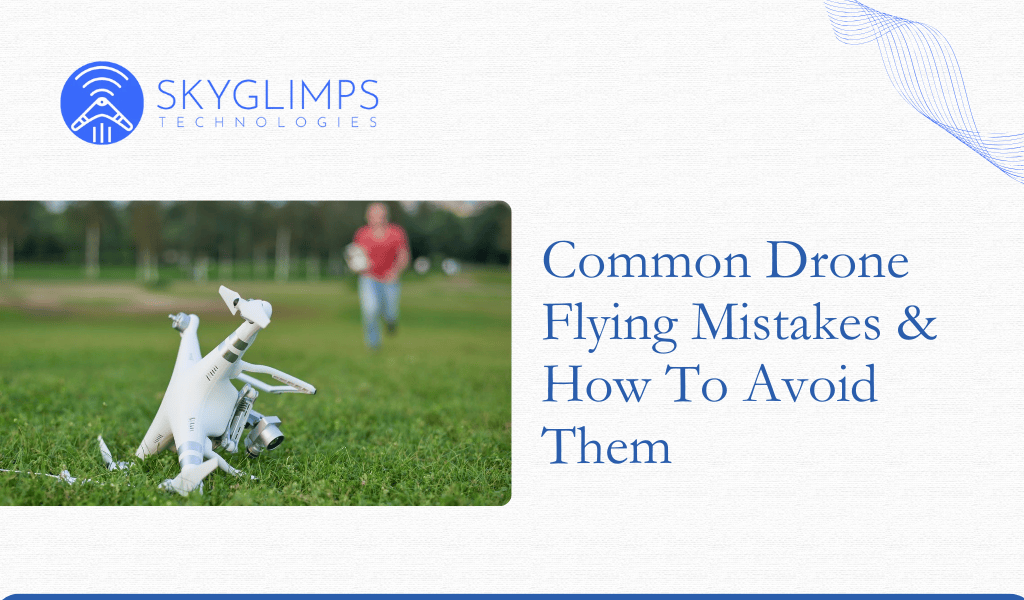
Flying drones can appear simple, but operational mistakes can lead to equipment loss, data failure, or safety violations. Whether you are a beginner or an experienced pilot, awareness of common errors helps prevent incidents and improves flight quality.
Most Frequent Mistakes and Solutions
1. Flying Without Preflight Checks
Skipping basic checks like propeller condition, GPS lock, firmware updates, or battery health can lead to mid flight failures.
Solution: Create a standard checklist before every flight.
2. Ignoring Weather Conditions
Strong wind, high humidity, or sudden temperature changes can affect flight stability and battery performance.
Solution: Always evaluate weather forecasts and avoid uncertain or extreme conditions.
3. Misjudging Battery Life
New pilots sometimes overestimate remaining flight time.
Solution: Maintain return to home margin and avoid draining batteries below recommended thresholds.
4. Flying Beyond Line of Sight
Losing visual tracking increases collision risks.
Solution: Follow VLOS regulations and use spotters when needed.
5. Poor Data Capture Technique
Incorrect altitude, overlap settings, or flight pattern mistakes affect mapping accuracy.
Solution: Use automated mission planning software and trained workflows.
Conclusion
Professional drone operations require discipline, situational awareness, and planned workflows. Avoiding common mistakes improves safety, legal compliance, equipment longevity, and operational success.