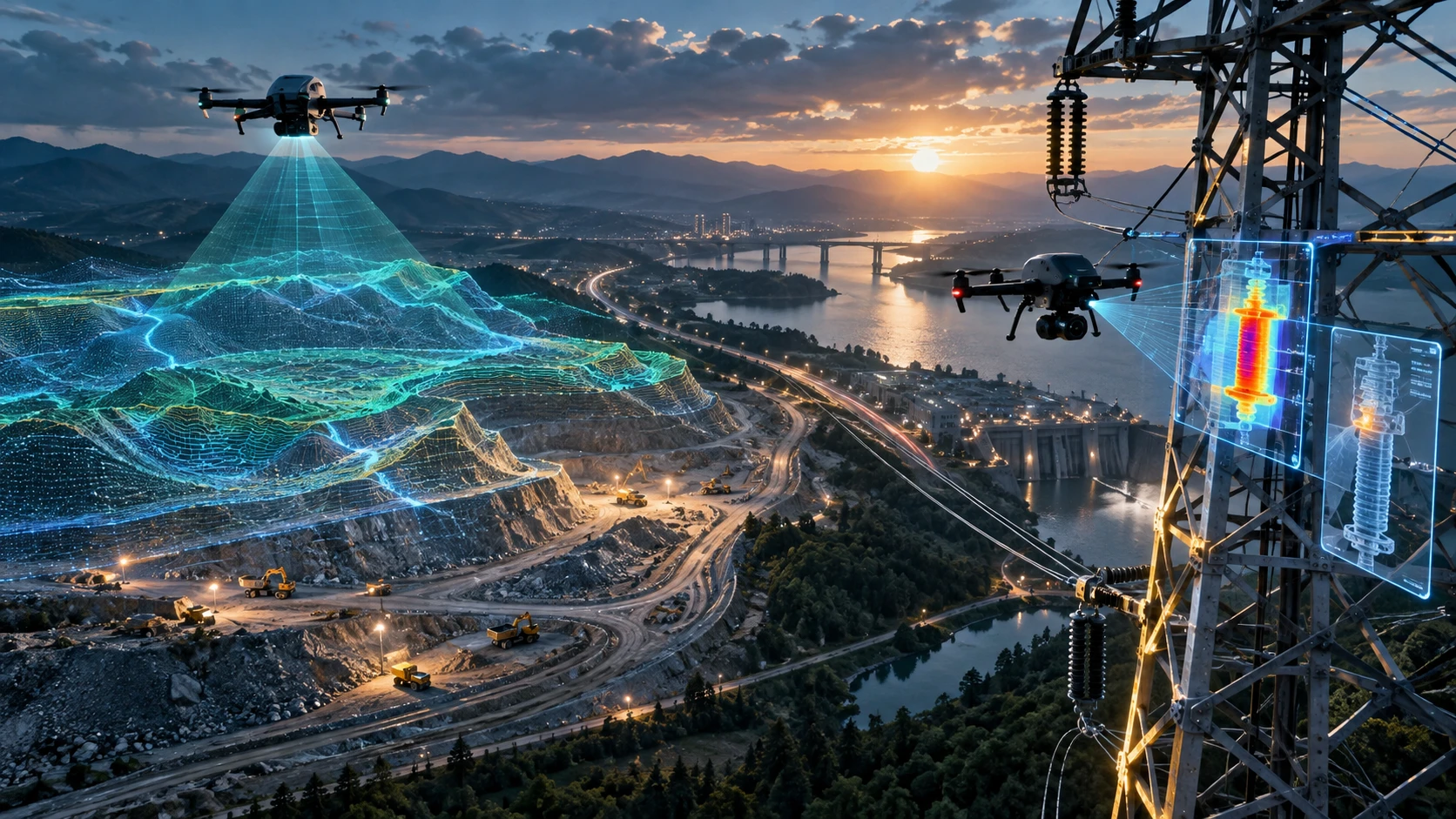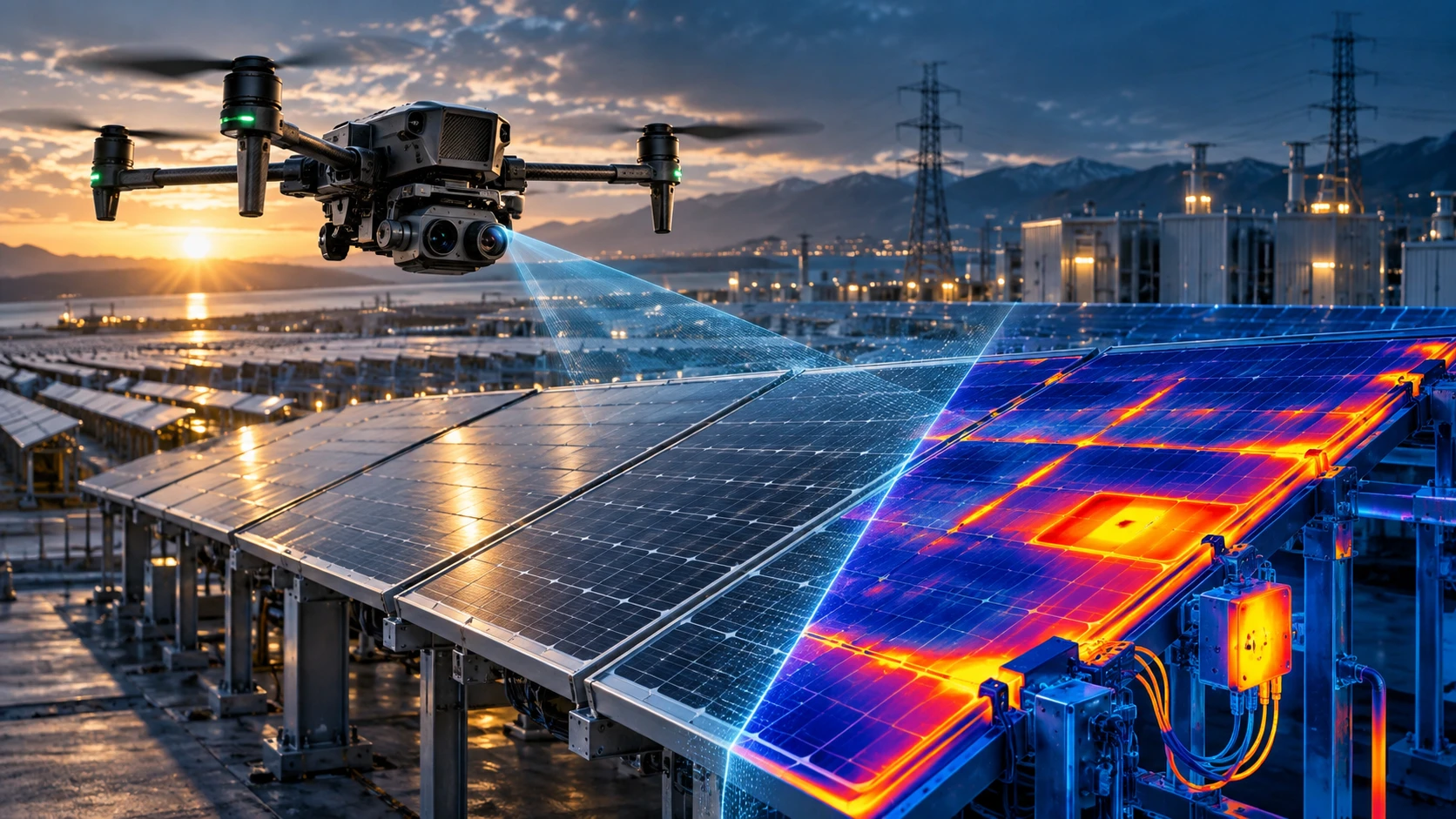

A drone inspection checklist helps industrial teams capture the right visual, thermal, and technical information before preparing an inspection report. Industrial assets such as power infrastructure, solar plants, factories, pipelines, towers, bridges, and large facilities require structured inspection workflows to identify issues, document conditions, and support maintenance decisions.
A drone inspection is not only about collecting aerial images. A professional inspection should define what assets need to be captured, what sensors are required, what defects should be recorded, and how findings should be reported.
This guide explains the complete drone inspection checklist for industrial assets, including pre-flight planning, data capture, thermal inspection requirements, reporting structure, and client-side expectations.
What is a drone inspection checklist?
A drone inspection checklist is a structured list of activities used to plan, capture, review, and report drone inspection data for industrial assets. It ensures that important areas are inspected, documented, and delivered according to project requirements.
A typical drone inspection checklist includes:
- Asset identification
- Inspection objective
- Site safety review
- Flight planning
- Sensor selection
- Visual image capture
- Thermal data capture
- Defect identification
- Asset condition recording
- GPS/location tagging
- Inspection report preparation
- Quality review
- Final delivery
A checklist reduces missed areas and helps create consistent inspection records across multiple sites and inspection dates.
Skyglimps Technologies LLP provides Thermal & RGB Inspections for organisations that need aerial visual inspection, thermal analysis, asset monitoring, and professional inspection reports.
Why are drone inspection checklists important?
Drone inspection checklists are important because industrial inspections involve multiple assets, safety requirements, sensor types, and reporting expectations. A structured approach ensures that inspection data is complete and useful.
A checklist helps teams:
- Inspect the correct assets
- Capture required angles
- Identify visible defects
- Record thermal anomalies
- Maintain inspection consistency
- Compare asset condition over time
- Reduce repeat site visits
- Improve maintenance planning
- Create better inspection reports
Without a checklist, inspections may focus only on obvious areas while missing important components that require closer review.
For large industrial facilities, repeatable inspection processes are especially important because asset conditions change over time.
What should be checked before a drone inspection?
Before a drone inspection begins, the team should review the asset details, inspection objective, site conditions, safety requirements, and required outputs. Good inspection quality starts before the drone takes off.
Pre-inspection checklist:
| Check | Purpose |
|---|---|
| Asset details | Understand what needs inspection |
| Site location | Plan access and flight conditions |
| Inspection objective | Define what issues to identify |
| Asset drawings/layouts | Understand structure and components |
| Previous inspection reports | Compare historical conditions |
| Required sensors | Select RGB, thermal, LiDAR, or other tools |
| Safety restrictions | Identify operational risks |
| Weather conditions | Ensure suitable flight conditions |
| Deliverables | Define report and file requirements |
The inspection team should understand whether the goal is routine monitoring, fault detection, compliance documentation, maintenance planning, or emergency assessment.
What assets can be inspected using drones?
Drones can inspect a wide range of industrial assets by capturing high-resolution visual and thermal data from difficult-to-access areas.
Common industrial inspection applications include:
- Power transmission lines
- Electrical towers
- Solar panels
- Wind turbines
- Pipelines
- Bridges
- Industrial structures
- Communication towers
- Buildings
- Factories
- Storage facilities
- Mining infrastructure
- Construction assets
- Railway infrastructure
Different assets require different inspection approaches. A solar panel inspection may focus on thermal anomalies, while a bridge inspection may focus on cracks, corrosion, and structural conditions.
What should be captured during a drone inspection?
A drone inspection should capture complete visual coverage of the asset, including critical components, problem areas, surrounding conditions, and location references.
The capture checklist may include:
Asset overview
- Full asset photograph
- Location context
- Surrounding environment
- Access points
- Asset identification markers
Structural details
- Joints
- Connections
- Fasteners
- Supports
- Surface conditions
- Visible damage areas
Defect areas
- Cracks
- Corrosion
- Damage
- Loose components
- Wear signs
- Leakage indicators
- Physical deformation
Documentation requirements
- Multiple viewing angles
- Close-up images
- GPS location
- Date and time
- Asset identification
- Inspection notes
The inspection should capture enough information for engineers and maintenance teams to understand the condition without requiring unnecessary repeat visits.
What role do RGB cameras play in drone inspections?
RGB cameras capture high-resolution visual information that helps identify physical conditions, surface defects, and visible asset damage. They are one of the most commonly used sensors in drone inspections.
RGB inspection can help identify:
- Cracks
- Corrosion
- Paint damage
- Loose parts
- Surface wear
- Structural changes
- Vegetation growth
- Physical obstructions
- Construction defects
High-resolution RGB imagery is useful because it provides detailed visual evidence that can be reviewed later by engineers and maintenance teams.
For many industrial inspections, RGB imagery forms the foundation of the inspection report.
What role does thermal imaging play in drone inspections?
Thermal imaging helps identify temperature differences that may indicate equipment issues, energy losses, overheating components, or abnormal operating conditions.
Thermal drone inspections are commonly used for:
- Solar panel inspection
- Electrical equipment monitoring
- Power line inspection
- Transformer checks
- Industrial equipment review
- Heat-loss detection
- Hotspot identification
Thermal data should be captured under suitable operating conditions. Temperature differences depend on factors such as equipment load, weather, sunlight, wind, and inspection timing.
A thermal image alone should not be treated as a final diagnosis. It should be reviewed with asset information and technical understanding.
What should be checked during thermal inspection?
Thermal inspection requires checking sensor settings, operating conditions, environmental factors, and detected temperature variations.
Thermal inspection checklist:
- Asset operating status
- Thermal camera settings
- Temperature range
- Emissivity settings
- Reflection conditions
- Weather conditions
- Sun exposure
- Wind conditions
- Load conditions
- Hotspot location
- Temperature difference
- Visual comparison with RGB image
A thermal anomaly should be documented with:
- Asset identification
- Location
- Thermal image
- RGB reference image
- Temperature reading
- Severity classification
- Inspection notes
Combining thermal and RGB data provides stronger context for maintenance decisions.
How are industrial asset defects documented?
Industrial asset defects are documented by recording their location, type, severity, images, thermal information where applicable, and recommended action.
A defect record may include:
| Information | Example |
|---|---|
| Asset name | Tower, panel, pipeline section |
| Defect type | Crack, hotspot, corrosion |
| Location | GPS coordinates or asset section |
| Severity | Low, medium, high |
| Evidence | RGB image or thermal image |
| Date | Inspection date |
| Recommendation | Repair, monitor, investigate |
A structured defect log helps maintenance teams prioritise actions and compare asset condition during future inspections.
What should a drone inspection report include?
A professional drone inspection report should convert captured data into clear findings, observations, and maintenance insights.
A complete inspection report may include:
- Project overview
- Asset details
- Inspection objective
- Survey date
- Equipment used
- Flight details
- Sensor details
- Inspection methodology
- Captured images
- Thermal analysis
- Defect findings
- Asset condition summary
- Location references
- Severity classification
- Recommendations
- Supporting files
The report should be understandable for both technical teams and management stakeholders.
How are drone inspection findings classified?
Inspection findings are usually classified based on severity, operational impact, safety risk, and maintenance priority.
A common classification approach:
| Level | Meaning |
|---|---|
| Critical | Immediate attention required |
| High | Priority maintenance required |
| Medium | Monitor or schedule repair |
| Low | Minor issue or observation |
Classification systems may differ depending on the asset type and client requirements.
For example, a hotspot on electrical equipment may require different action compared with a surface crack on a building structure.
How does drone inspection help predictive maintenance?
Drone inspection supports predictive maintenance by creating regular records of asset condition and identifying issues before they become major failures.
Benefits include:
- Early defect identification
- Reduced manual inspection risk
- Better maintenance planning
- Historical condition tracking
- Faster decision-making
- Reduced downtime
- Improved asset visibility
Regular inspections can create a condition history for critical infrastructure. This helps teams understand whether an issue is stable, improving, or worsening.
What industries benefit from drone inspection checklists?
Industries with large, complex, or difficult-to-access assets benefit from structured drone inspection workflows.
Key industries include:
Power and utilities
- Transmission lines
- Distribution networks
- Electrical towers
- Substations
Renewable energy
- Solar farms
- Wind energy assets
Infrastructure
- Bridges
- Roads
- Railways
- Industrial structures
Manufacturing
- Factories
- Storage facilities
- Equipment areas
Construction
- Progress monitoring
- Structural documentation
- Safety review
Mining
- Infrastructure inspection
- Site documentation
- Asset monitoring
Each industry requires different inspection criteria, sensors, and reporting formats.
What safety checks are required before drone inspection?
Safety checks ensure that drone inspections are conducted without creating risks to people, assets, or operations.
Safety checklist:
- Site permission
- Flight approval requirements
- Weather review
- Wind conditions
- Nearby people and vehicles
- Electrical hazards
- Restricted areas
- Emergency procedures
- Communication plan
- Take-off and landing zone
- Battery management
- Equipment inspection
Industrial environments may have additional safety requirements depending on the asset and operating conditions.
How often should industrial assets be inspected by drones?
Drone inspection frequency depends on asset importance, operating environment, failure risk, regulations, and maintenance strategy.
Inspection schedules may include:
- Monthly monitoring
- Quarterly inspection
- Seasonal inspection
- Annual inspection
- After extreme weather
- After operational incidents
- Before maintenance shutdowns
- Before project handover
High-risk assets may require more frequent monitoring than low-risk assets.
The right inspection frequency should be based on asset criticality, not only cost.
What should clients define before a drone inspection project?
Clients should define the asset, inspection objective, required sensors, reporting format, and decision-making requirements before starting a drone inspection project.
Important questions include:
- Which assets need inspection?
- What problems need identification?
- Is RGB, thermal, or both required?
- Are previous inspection records available?
- What level of detail is required?
- Are GPS-tagged findings needed?
- What report format is required?
- Who will review the findings?
- Are recommendations required?
- Is repeat inspection planned?
A clear scope helps the inspection team capture the right data.
What mistakes should clients avoid?
Clients should avoid treating drone inspection as only an image collection exercise. The value comes from structured capture, analysis, and reporting.
Common mistakes include:
- Not defining inspection objectives
- Capturing only overview images
- Ignoring thermal requirements
- Not sharing asset details
- Not reviewing previous inspection data
- Not defining report requirements
- Ignoring safety planning
- Not maintaining inspection history
- Choosing frequency only based on cost
- Not validating findings with technical teams
A well-planned inspection provides actionable information, not just photographs.
Why choose Skyglimps Technologies for drone inspections?
Skyglimps Technologies LLP is a Kolkata-based drone services company and DGCA-certified Remote Pilot Training Organisation serving government and enterprise clients across Eastern India. The company supports drone-enabled workflows across thermal inspection, RGB inspection, surveying, mapping, GIS, documentation, surveillance, and training.
Skyglimps Technologies, a DGCA-certified RPTO in Kolkata, is positioned for organisations that need aerial inspection data, thermal analysis, asset documentation, condition reports, and professional drone inspection workflows.
For industrial assets across Kolkata, West Bengal, Jharkhand, Odisha, and Eastern India, local coordination can help improve inspection planning, asset coverage, sensor selection, field execution, reporting, and maintenance decision support.
A drone inspection checklist ensures that every flight captures meaningful information and every report supports better asset management.
FAQ: Drone Inspection Checklist
A drone inspection checklist includes planning, safety checks, asset identification, image capture requirements, sensor selection, defect documentation, reporting, and final quality review.
Common sensors include RGB cameras for visual inspection and thermal cameras for temperature-based analysis. Some projects may also use LiDAR or other specialised sensors.
A drone inspection report may include asset details, images, thermal findings, defect locations, severity classification, observations, recommendations, and supporting files.
Yes. Drones can inspect electrical infrastructure such as transmission lines, towers, substations, and equipment using visual and thermal data.
RGB provides visual details while thermal imaging helps identify temperature differences. Together they provide better context for industrial asset assessment.
Inspection frequency depends on asset criticality, operating conditions, maintenance requirements, and risk level. Some assets require regular monitoring while others need periodic inspection.
Drone inspections can reduce the need for people to physically access difficult or hazardous areas, improving safety in many inspection scenarios.
Capture the right data before making maintenance decisions
A drone inspection checklist helps industrial teams move from simple aerial photography to structured asset intelligence. By defining inspection objectives, selecting the right sensors, capturing complete visual and thermal data, documenting defects, and preparing clear reports, organisations can make better maintenance decisions.
For power, renewable energy, infrastructure, manufacturing, construction, and industrial assets, a professional drone inspection workflow helps improve visibility while reducing inspection challenges.
If your organisation needs RGB inspections, thermal inspections, asset condition reports, or professional drone inspection services in Kolkata, West Bengal, or Eastern India, connect with Skyglimps Technologies LLP through the Thermal & RGB Inspections service page and share your asset type, inspection objective, location, required sensors, and reporting requirements.