Introduction
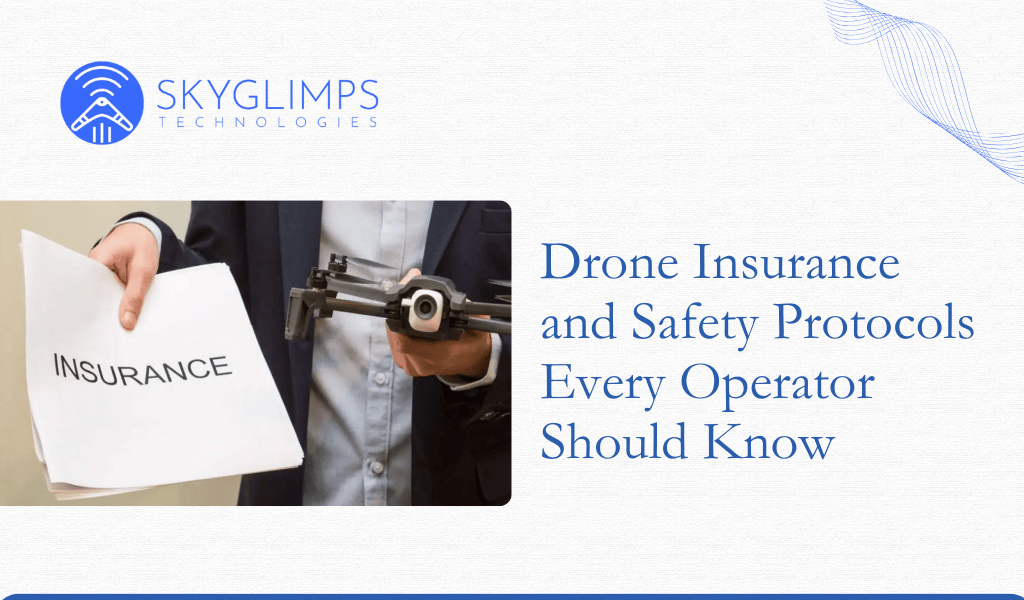
As drones become standard tools in commercial operations, risk management becomes essential. Insurance and safety protocols protect assets, operators, and clients from unexpected incidents. For many industries, insurance is not optional but a requirement for compliance and trust.
Why Drone Insurance Matters
Covers damage to the drone
Covers third party liability in case of accidents
Protects data based operational risks
Builds operational credibility
Some clients and government tenders only work with insured drone service providers.
Types of Drone Insurance
Hull insurance covers damage or loss of the drone and equipment
Liability insurance covers damage to property or injuries caused during operations
Payload insurance protects expensive cameras or sensors like LiDAR or thermal systems
Operational risk insurance covers data loss, cyber issues, or mission specific exposure
Essential Safety Protocols
Airspace Awareness
Pilots must know restricted or high sensitivity zones and always follow Digital Sky permissions.
Operational Checklists
Pre flight, in flight, and post flight checklists help maintain consistency and prevent oversight.
Emergency Procedures
Pilots must know how to respond to signal loss, low battery situations, uncontrolled movement, or environmental risks.
Maintenance Schedule
Regular inspection and servicing ensure safe and reliable aircraft performance.
Conclusion
Insurance and safety protocols are integral to professional drone operations. They reduce operational risk, ensure compliance, and build trust with clients and authorities. Any organisation planning long term drone usage should prioritise both structured safety workflows and proper insurance coverage.