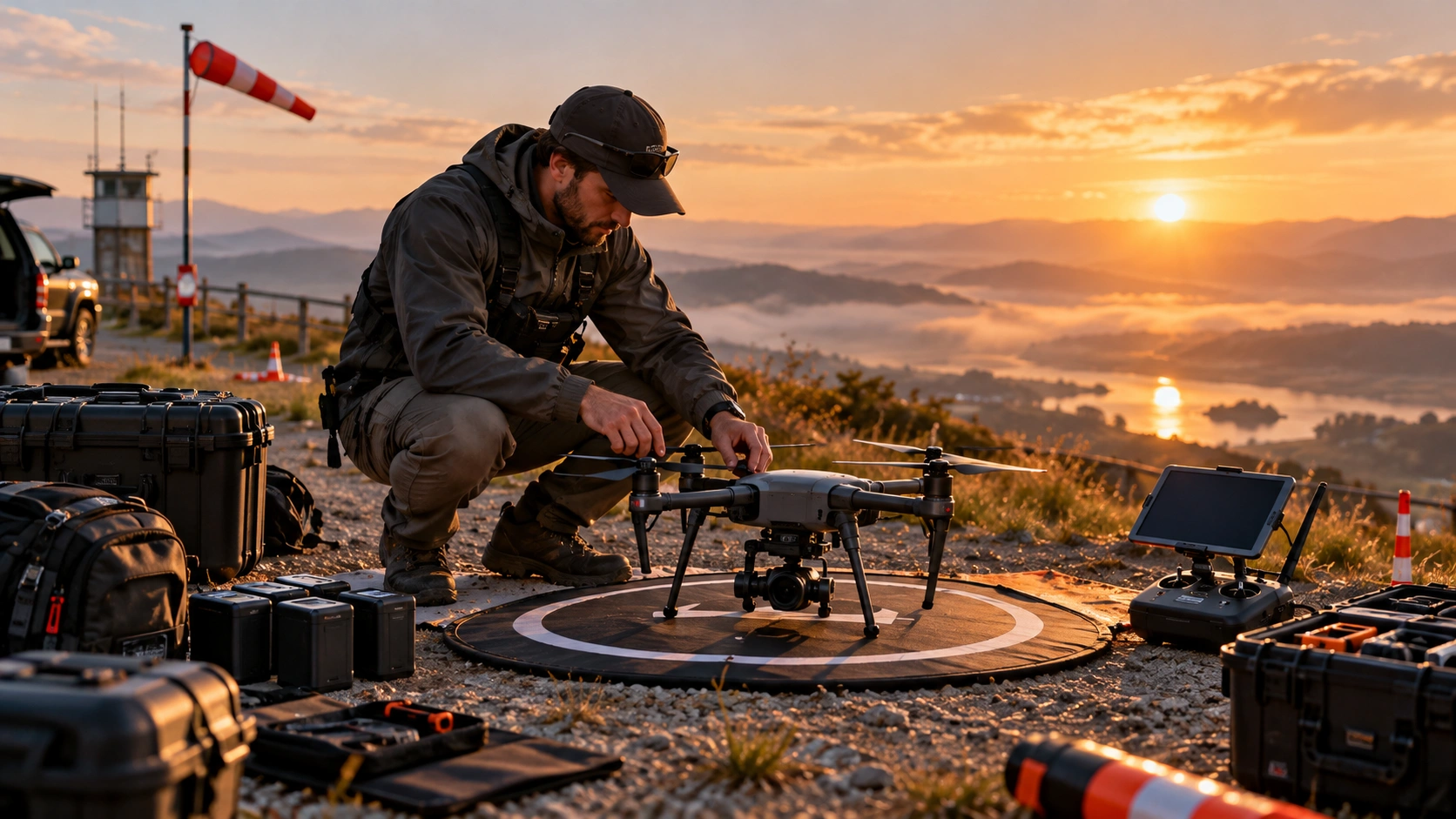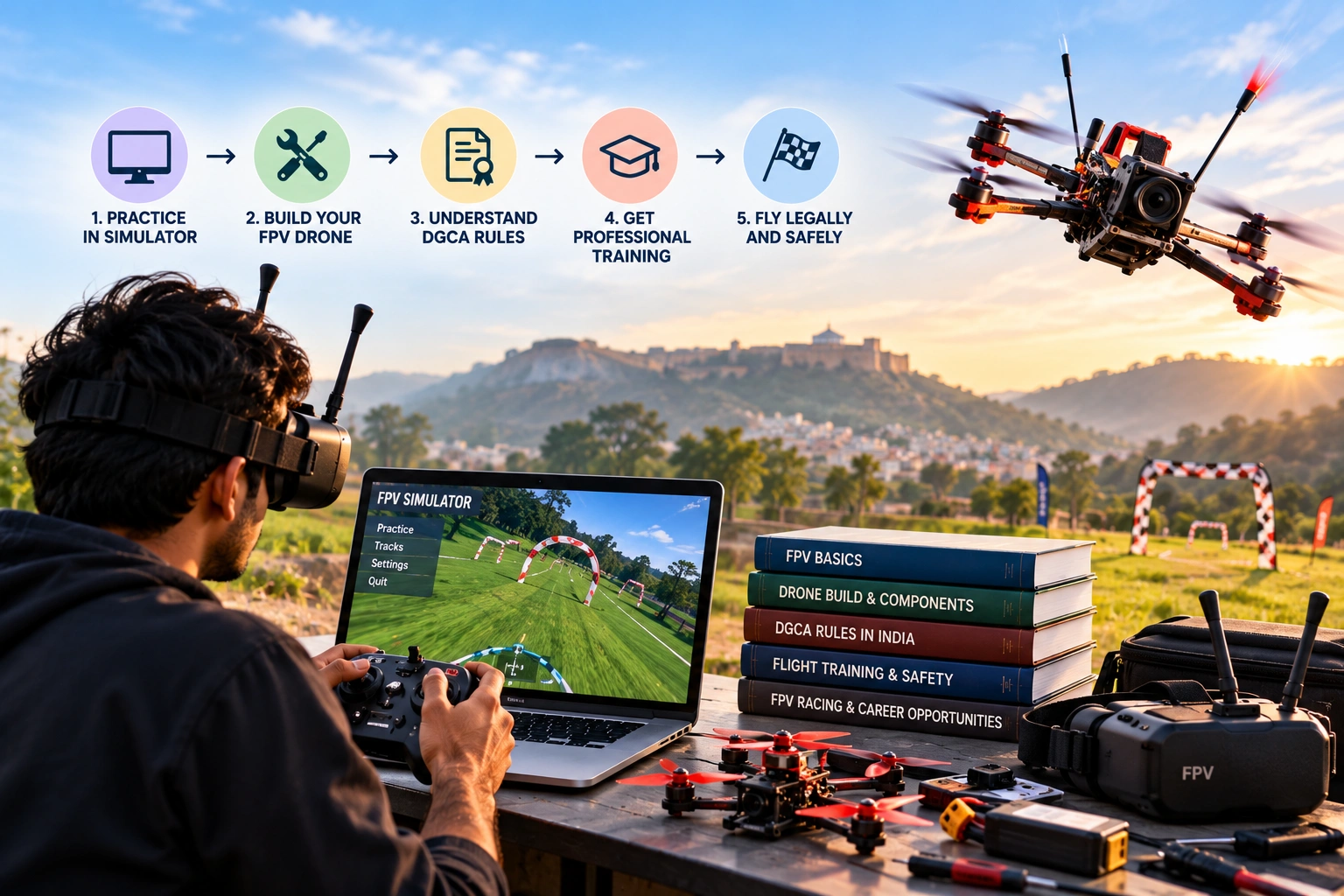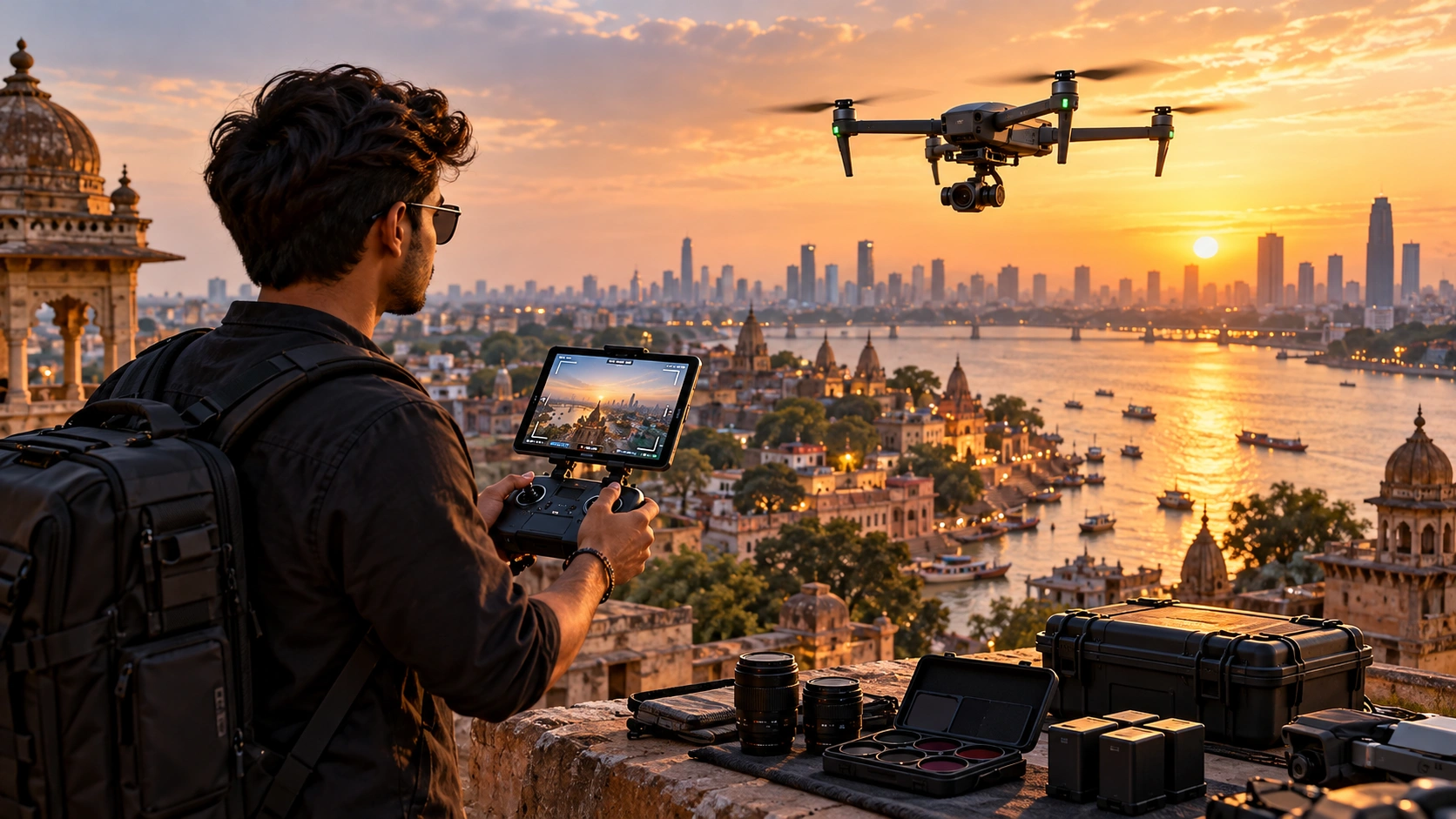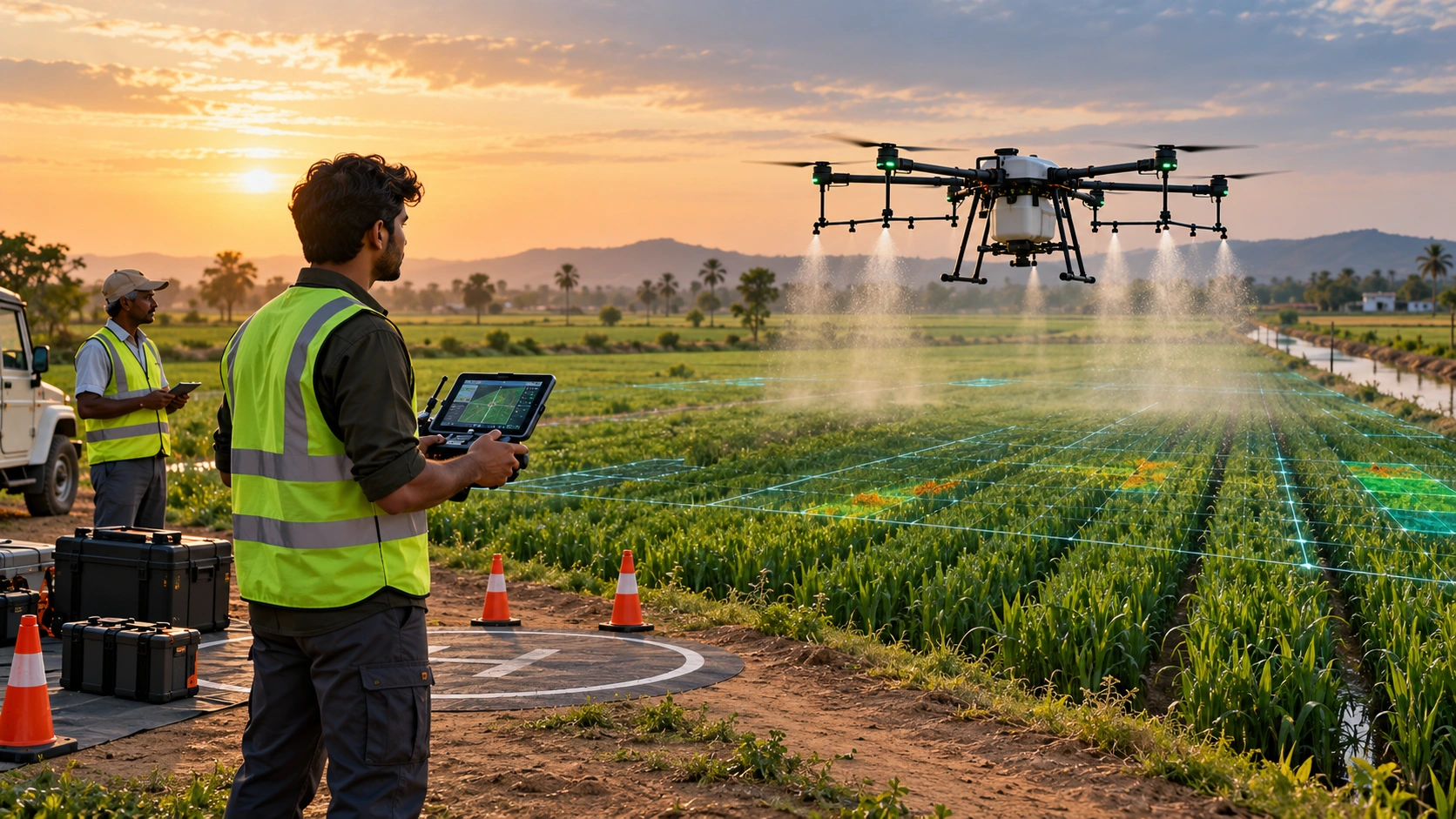
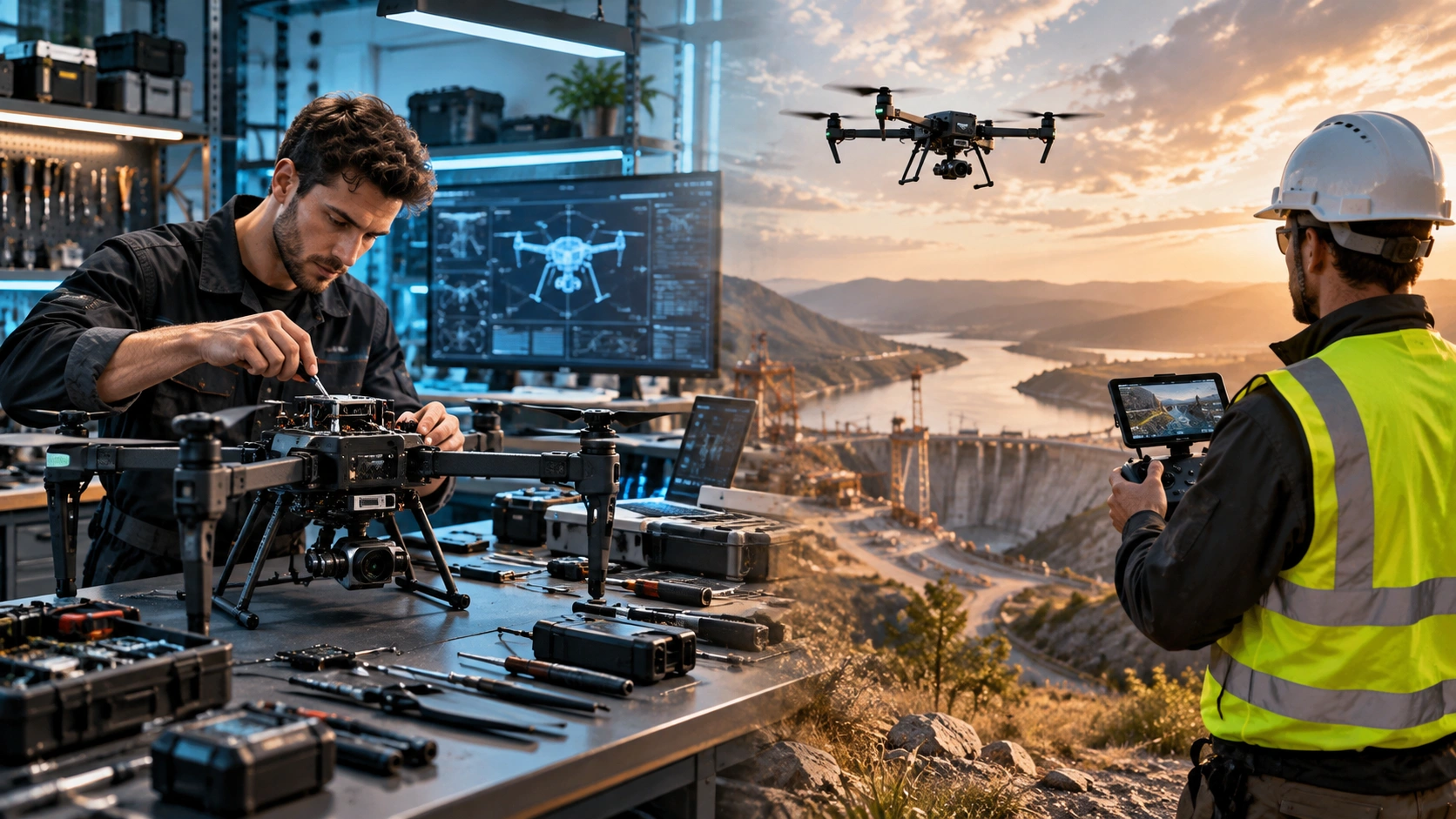
The drone industry is creating career opportunities beyond simply flying an aircraft. Two important career paths are drone pilot and drone technician.
A drone pilot focuses primarily on operating drones safely and completing aerial missions. A drone technician focuses on the equipment itself, including assembly, maintenance, troubleshooting, repairs and operational readiness.
So, which career is better?
Neither is universally better. The right choice depends on whether you are more interested in flying drones or working with their technology and hardware.
A simple way to understand the difference is:
Drone Pilot → Operates the drone
Drone Technician → Maintains and supports the drone
There can also be significant overlap. A professional pilot benefits from understanding basic maintenance, while a technician who understands flight operations can be valuable in field environments.
DGCA’s remote-pilot training syllabus itself includes drone equipment maintenance, along with risk assessment, payload operations and an introduction to drone data and analysis.
What Does a Drone Pilot Do?
A drone pilot is responsible for operating an unmanned aircraft during a mission.
Depending on the industry, the work can include:
- Pre-flight inspections
- Flight planning
- Drone operation
- Camera or payload control
- Aerial photography
- Survey data capture
- Inspection flights
- Construction documentation
- Mapping missions
- Safety monitoring
- Post-flight checks
A pilot may work in industries such as:
- Construction
- Surveying and mapping
- Infrastructure
- Agriculture
- Real estate
- Power and energy
- Inspection
- Media and filmmaking
- Security and surveillance
The exact skills required depend on the application.
For example, a mapping pilot needs to understand mission planning and data capture, while an aerial filmmaker needs strong camera and cinematography skills.
For candidates pursuing the applicable Remote Pilot Certificate pathway, training is conducted through an authorised Remote Pilot Training Organisation (RPTO). DGCA’s training framework covers subjects including air law, airspace, flight principles, weather, maintenance, safety, risk assessment and practical flying.
What Does a Drone Technician Do?
A drone technician works more closely with the hardware and technical systems of a drone.
Typical responsibilities can include:
- Drone assembly
- Component installation
- Preventive maintenance
- Troubleshooting
- Motor and propeller checks
- Battery inspection
- Controller checks
- Sensor checks
- Firmware and system diagnostics
- Payload installation
- Repair and replacement
- Pre-flight technical checks
A technician may work in a workshop, manufacturing environment, service centre or directly at project sites.
For example, if a professional drone used for surveying develops a motor, battery or sensor problem, a technician may be responsible for identifying the issue and returning the aircraft to operational condition.
This makes technical knowledge particularly valuable for organisations that operate multiple drones.
What Is a Drone Technician Course?
A drone technician course is designed to teach the technical skills needed to assemble, maintain, diagnose and service drones.
The exact curriculum varies between training providers, but a useful programme may cover:
Drone Hardware
- Flight controllers
- Motors
- ESCs
- Propellers
- Batteries
- GPS modules
- Sensors
- Communication systems
- Payloads
Assembly
Students may learn how different components are connected and how to assemble a functioning drone system.
Maintenance
Training can include:
- Routine inspections
- Component checks
- Battery care
- Propeller inspection
- Electrical connections
- Preventive maintenance
Troubleshooting
Technicians need to understand how to identify problems rather than simply replace parts.
For example:
Drone does not power on → Check battery → Power system → Connections → Controller/electronics
Repair
Depending on the course, practical training may include component replacement and basic repair procedures.
Testing
A technician should know how to verify whether a drone is ready for safe operation after maintenance or repair.
DGCA’s official remote-pilot syllabus also includes drone equipment maintenance, while SkyGlimps’ current DGCA-certified pilot training includes basic assembly and maintenance as part of its practical curriculum.
Drone Pilot vs Drone Technician: What Is the Difference?
The biggest difference is the primary responsibility.
| Factor | Drone Pilot | Drone Technician |
|---|---|---|
| Main role | Operates drones | Maintains and services drones |
| Primary skill | Flying and mission execution | Hardware and troubleshooting |
| Flight planning | Important | Basic understanding |
| Drone assembly | Basic knowledge useful | Core skill |
| Maintenance | Basic checks | Major responsibility |
| Repairs | Limited/basic | Important |
| Data capture | Often required | Usually secondary |
| Safety | Core responsibility | Important |
| Regulations | Important | Important |
| Electronics | Basic understanding useful | More advanced |
| Field work | Very common | Common depending on role |
| Best suited to | People who enjoy flying | People who enjoy technology and repair |
Neither role is limited to one industry.
A technician can work in surveying, agriculture, inspection, manufacturing or defence-related technology environments, while a pilot can specialise in mapping, inspection, media or construction.
Which Career Requires More Technical Knowledge?
Generally, drone technicians require deeper hardware and electronics knowledge, while pilots require deeper knowledge of flight operations and mission execution.
A technician may need to understand:
- Motors
- ESCs
- Flight controllers
- Wiring
- Batteries
- Sensors
- Communication systems
- Firmware
- Diagnostics
A pilot may need to understand:
- Flight controls
- Airspace
- Weather
- Mission planning
- Risk assessment
- Payload operation
- Emergency procedures
- Aerial data capture
However, the best professionals often understand both sides.
A pilot who can identify a basic equipment problem can work more independently.
A technician who understands how drones are used in the field can diagnose problems more effectively.
Is a Drone Technician Course Better Than a Drone Pilot Course?
It depends on your career goal.
Choose a drone pilot course if you want to:
- Fly drones professionally
- Conduct aerial surveys
- Capture aerial imagery
- Perform inspections
- Work in construction monitoring
- Enter aerial cinematography
- Operate drones for commercial projects
Choose a drone technician course if you want to:
- Assemble drones
- Repair drones
- Maintain drone fleets
- Work with drone hardware
- Troubleshoot technical problems
- Work in drone manufacturing
- Support field operations
If you are interested in both, a combination can be even more useful:
Pilot Training + Technical Maintenance Skills
This can give you a broader understanding of the complete drone workflow.
Do Drone Technicians Need an RPC?
Not simply because they work as technicians.
The Remote Pilot Certificate relates to operating drones as a remote pilot under the applicable regulatory framework. DGCA defines a remote pilot as the individual responsible for duties essential to the operation of an unmanned aircraft and who manipulates the flight controls during flight.
Therefore, someone who only performs:
- Repairs
- Maintenance
- Assembly
- Diagnostics
- Technical servicing
does not automatically become a remote pilot merely because they work on drones.
However, if the technician’s job also requires them to operate drones, they should determine whether the applicable pilot certification and operational requirements apply to that work.
This distinction is important when choosing between technical and pilot training.
What Skills Should a Drone Technician Learn?
If you are considering a career as a drone technician, focus on developing practical technical skills.
1. Drone Components
Understand how major components work together.
2. Electronics
Learn the basics of:
- Voltage
- Current
- Connectors
- Wiring
- Power systems
3. Motors and Propulsion
Understand motor behaviour, propellers and propulsion systems.
4. Batteries
Learn safe battery handling, charging, storage and basic diagnostics.
5. Flight Controllers
Understand how flight controllers interact with sensors and other systems.
6. Troubleshooting
Develop a systematic approach:
Identify → Test → Diagnose → Repair → Test Again
7. Maintenance
Learn how to perform routine checks before equipment reaches the field.
8. Basic Software Knowledge
Modern drones combine hardware and software, so technicians may also need familiarity with firmware, configuration tools and diagnostic systems.
What Skills Should a Drone Pilot Learn?
A professional drone pilot needs a different skill set.
Flight Skills
- Take-off
- Landing
- Hovering
- Manoeuvring
- Orientation
- Emergency procedures
Regulatory Knowledge
- Drone regulations
- Airspace
- Operational restrictions
- Safety requirements
Mission Planning
- Flight routes
- Altitude
- Battery planning
- Take-off and landing areas
- Weather
Payload Operation
Depending on the application:
- RGB cameras
- Thermal cameras
- Mapping sensors
- Other specialised payloads
Industry Skills
A pilot can specialise in:
Surveying
Inspection
Construction
Agriculture
Photography
Videography
Mapping
DGCA’s training syllabus covers areas such as air law, airspace, flight principles, meteorology, maintenance, risk assessment, emergency procedures, payloads and drone data.
Which Career Has Better Job Opportunities?
Both careers can lead to opportunities, but the type of work is different.
Drone Pilot Opportunities
Pilots may find work with:
- Drone service companies
- Survey companies
- Construction firms
- Infrastructure companies
- Inspection teams
- Media companies
- Agriculture organisations
- Real estate businesses
Drone Technician Opportunities
Technicians may work with:
- Drone manufacturers
- Repair centres
- Drone service companies
- Hardware companies
- Survey organisations
- Agriculture drone companies
- Inspection companies
- Training organisations
- Drone dealerships
As the number of drones used by businesses increases, technical support becomes increasingly important.
A company operating a fleet does not only need pilots.
It also needs people who can keep the equipment operational.
Which Career Is Better for Beginners?
There is no single answer.
Ask yourself what you naturally enjoy.
Choose Pilot Training If You Like:
- Flying
- Outdoor work
- Photography
- Travel
- Field projects
- Technology
- Working at different locations
Choose Technician Training If You Like:
- Electronics
- Machines
- Repair
- Troubleshooting
- Building things
- Hands-on technical work
- Understanding how systems work
Choose Both If You Like:
- Flying
- Technology
- Electronics
- Field work
- Problem-solving
A person with both operational and technical knowledge can potentially take on a wider range of responsibilities.
Can a Drone Technician Become a Drone Pilot?
Yes.
Technical experience can provide a useful foundation for pilot training.
A technician who understands:
- Batteries
- Motors
- Sensors
- Flight controllers
- Payloads
- Maintenance
already understands many of the physical systems involved in drone operations.
However, technical knowledge does not replace the applicable pilot training and certification requirements.
If you want to operate drones professionally, you should complete the appropriate pilot training pathway for the category and operation you intend to undertake.
Can a Drone Pilot Become a Drone Technician?
Yes, but additional technical training is usually needed.
A pilot may understand how to operate a drone but not necessarily how to diagnose:
- Motor failures
- ESC problems
- Wiring issues
- Battery faults
- Sensor problems
- Flight-controller issues
A technical course or practical maintenance training can help bridge this gap.
This can be particularly useful for freelancers and small drone companies that need to handle basic equipment issues in the field.
Which Career Is Better for a Drone Service Business?
If you plan to start a drone service business, pilot skills are usually the starting point, because you need to deliver the actual drone service.
For example:
Construction → Drone Pilot → Aerial Progress Documentation
Surveying → Drone Pilot → Mapping Data Capture
Inspection → Drone Pilot → Inspection Imagery
But technical knowledge can become a major advantage as the business grows.
For example:
Drone Pilot + Technician
can potentially:
- Perform pre-flight checks
- Handle basic maintenance
- Diagnose equipment issues
- Reduce downtime
- Manage batteries
- Prepare equipment for projects
For a larger operation, you may eventually have dedicated pilots and technicians.
What Training Path Should You Choose?
Your training should match your intended career.
Path 1: Professional Drone Pilot
Beginner → DGCA-authorised pilot training → RPC pathway → Practical experience → Industry specialisation
Path 2: Drone Technician
Beginner → Drone technician course → Assembly → Maintenance → Troubleshooting → Repair experience
Path 3: Pilot + Technician
Pilot training → Technical maintenance training → Industry specialisation → Field experience
Path 4: Drone Survey Professional
Pilot training → Mapping & surveying → Photogrammetry → GIS → Survey projects
Path 5: Drone Inspection Professional
Pilot training → RGB/thermal inspection → Asset-specific knowledge → Inspection projects
The strongest path depends on the work you want to perform after training.
What Should You Look for in a Drone Technician Course?
Before enrolling in a drone technician course, check the curriculum carefully.
A useful technical programme should ideally provide practical exposure to:
- Drone components
- Assembly
- Electronics
- Motors
- Propellers
- Batteries
- Flight controllers
- Sensors
- Maintenance
- Troubleshooting
- Diagnostics
- Repair
- Testing
- Safety
Do not choose a course solely because it has “drone” in its name.
Ask:
How much hands-on training is included?
Will I actually assemble a drone?
Will I troubleshoot real equipment?
What tools will I use?
What certificate will I receive?
What jobs or applications does the course prepare me for?
Practical experience is particularly important for technical careers.
Can Pilot Training Include Technical Maintenance?
Yes.
Pilot training is not necessarily limited to flying.
DGCA’s training syllabus includes Drone Equipment Maintenance, and the current SkyGlimps DGCA-certified small-category pilot programme includes basic assembly and maintenance during training.
SkyGlimps’ current programme also includes regulatory knowledge, flight fundamentals, weather, risk assessment, safety, payload operations, simulator training, practical flying and final flying assessment.
This means a pilot can develop a useful foundation in technical maintenance without necessarily becoming a full-time drone technician.
For someone who wants a broader drone career, additional specialised technical training can then be considered.
Drone Technician vs Drone Pilot: Quick Career Decision
Use this simple guide:
| If You Prefer… | Consider |
|---|---|
| Flying outdoors | Drone Pilot |
| Electronics | Drone Technician |
| Photography | Drone Pilot |
| Repairing machines | Drone Technician |
| Field missions | Drone Pilot |
| Troubleshooting | Drone Technician |
| Surveying | Drone Pilot + Mapping |
| Drone hardware | Drone Technician |
| Aerial inspection | Drone Pilot + Inspection |
| Building drones | Drone Technician |
| Starting a drone service | Drone Pilot + Technical Skills |
| Working with drone fleets | Pilot + Technician Skills |
The decision does not have to be permanent.
You can start with one discipline and develop the other later.
Frequently Asked Questions
A drone pilot primarily operates drones and manages aerial missions, while a drone technician focuses on drone assembly, maintenance, troubleshooting and repair.
A drone technician course can cover drone components, assembly, electronics, batteries, motors, flight controllers, maintenance, troubleshooting, diagnostics and repairs. The exact curriculum depends on the training provider.
Not simply for performing technical maintenance or repairs. An RPC relates to applicable remote-pilot operations. If a technician also operates drones, the certification requirements applicable to that operation should be checked.
Neither is universally better. Choose pilot training if you enjoy flying and field operations; choose technician training if you prefer electronics, assembly, maintenance and troubleshooting.
Yes. Combining pilot training with technical maintenance skills can provide a broader understanding of drone operations and may be useful for field service, fleet management and drone businesses.
Which Drone Career Is Right for You?
The drone industry needs both pilots and technicians.
A drone cannot complete a mapping mission without someone who can operate it.
But the aircraft also cannot remain productive without people who can maintain, troubleshoot and repair it.
If you enjoy flying, fieldwork, aerial data and mission execution, the drone pilot path may suit you better.
If you enjoy electronics, assembly, repair and troubleshooting, a drone technician course may be the better starting point.
And if you enjoy both, combining the two skill sets can give you a broader foundation for a career in the drone industry.
For aspiring pilots, SkyGlimps currently offers DGCA-Certified Small Category Drone Pilot Training in Kolkata, including regulatory training, simulator practice, basic assembly and maintenance, supervised practical flying, night flying operations and final flying assessment.
You can explore the current SkyGlimps DGCA-Certified Drone Training programme for the latest course information.
Ultimately, the best career path is not determined by which role sounds more exciting.
It comes down to the question:
Do you want to operate the technology, maintain the technology, or learn to do both?
That answer can help you choose the right training and build the right skills for your future in the drone industry.