Drone data is no longer just images from the sky. It has evolved into high resolution structured intelligence that government departments across India are now depending on for operational planning, compliance, land records management and monitoring public assets. Departments that earlier relied on outdated satellite maps or manual surveys are now shifting to faster and more accurate drone based data models.
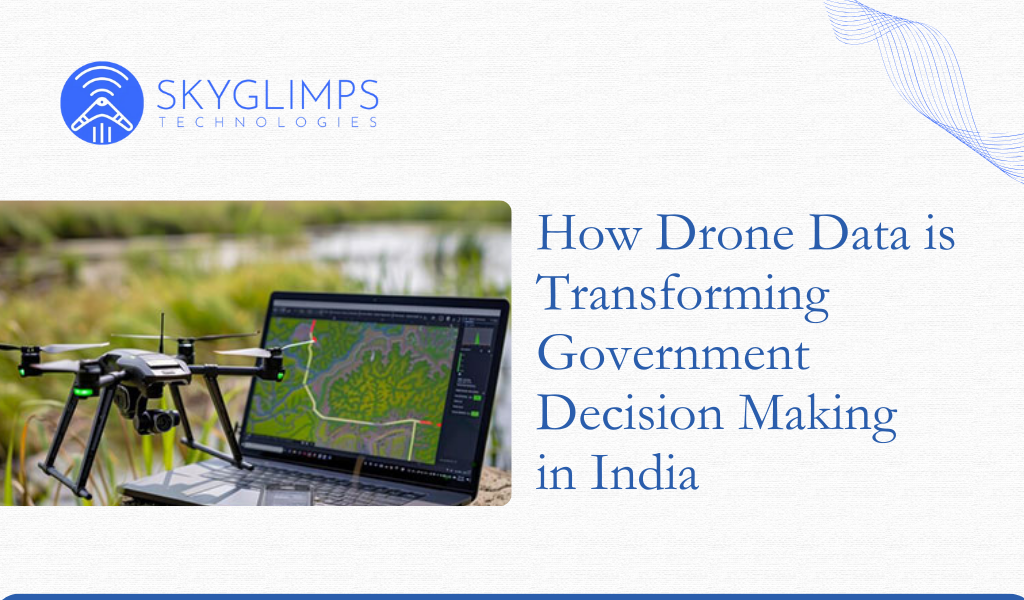
Drone based mapping offers a massive upgrade in speed. What took months through manual surveys can now be completed in a few days and with higher precision. Government bodies involved in urban planning, forestry, irrigation, mining and disaster response are actively adopting drone mapping as a standard practice. The accuracy of geo referenced orthomosaics and point clouds ensures that decisions are based on real time ground conditions rather than assumptions.
Another major advantage is scalability. A single drone fleet can cover hundreds of square kilometres in record time without requiring extensive manpower or expensive heavy equipment. With emerging platforms integrating drones into GIS workflows and cloud based dashboards, officers can review site conditions, track progress and compare time based changes anytime without physically visiting the location.
India is moving toward digital governance at scale. Drone based intelligence plays a key role in building accountability and transparency across public projects. The government’s increasing push for technology adoption signals that drones will soon become a standard asset across every district. The shift has already started and the impact is showing.