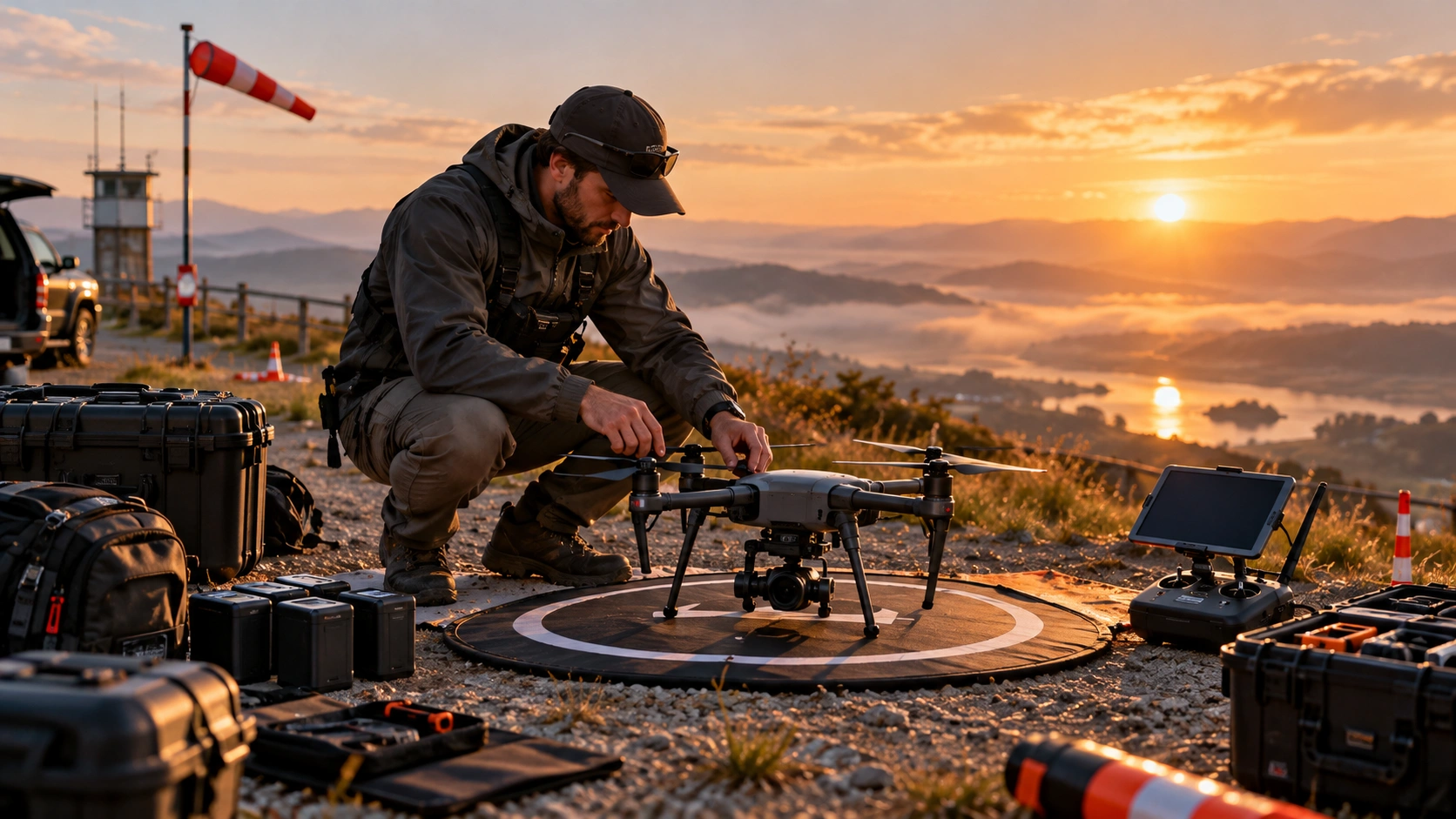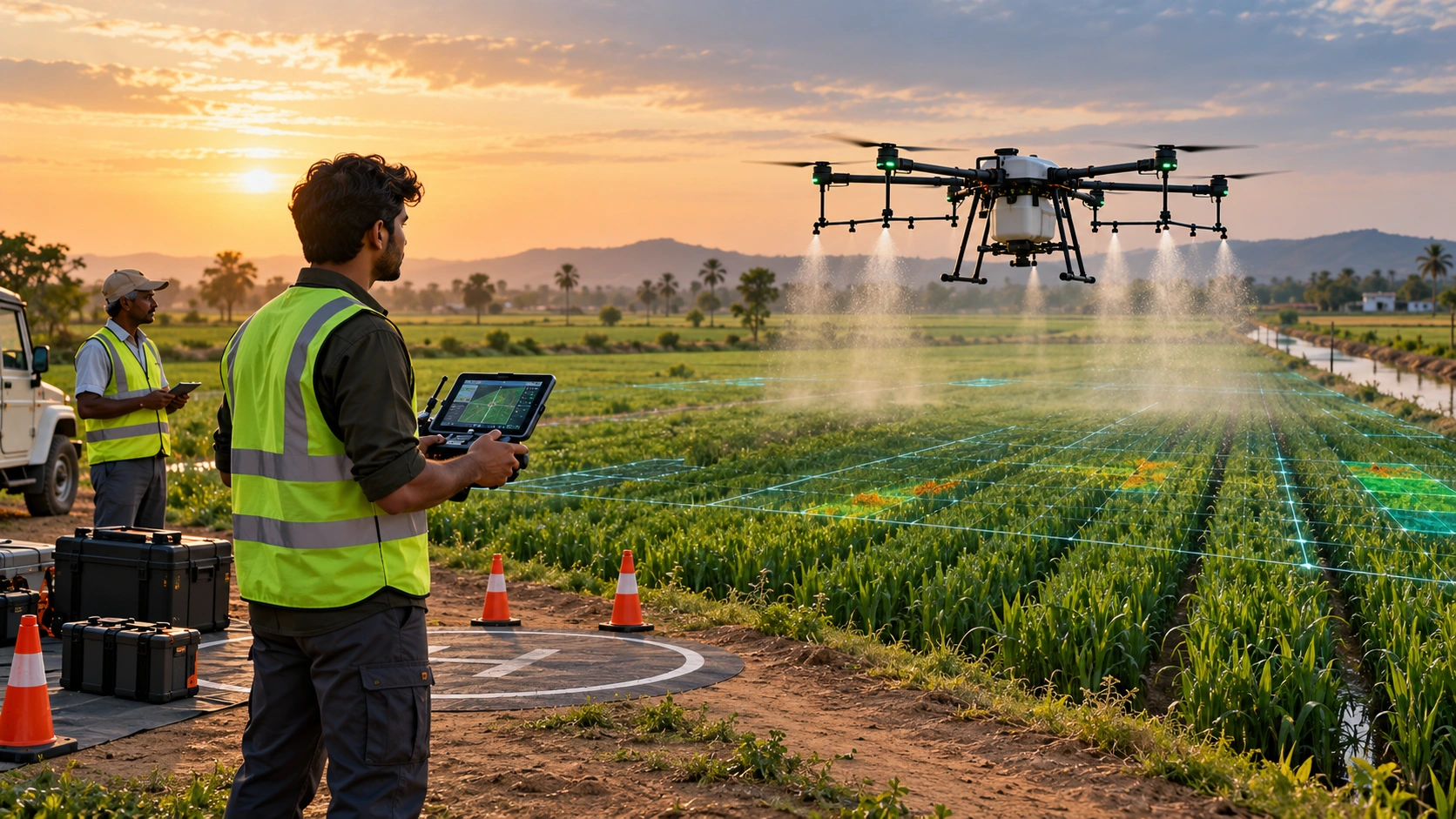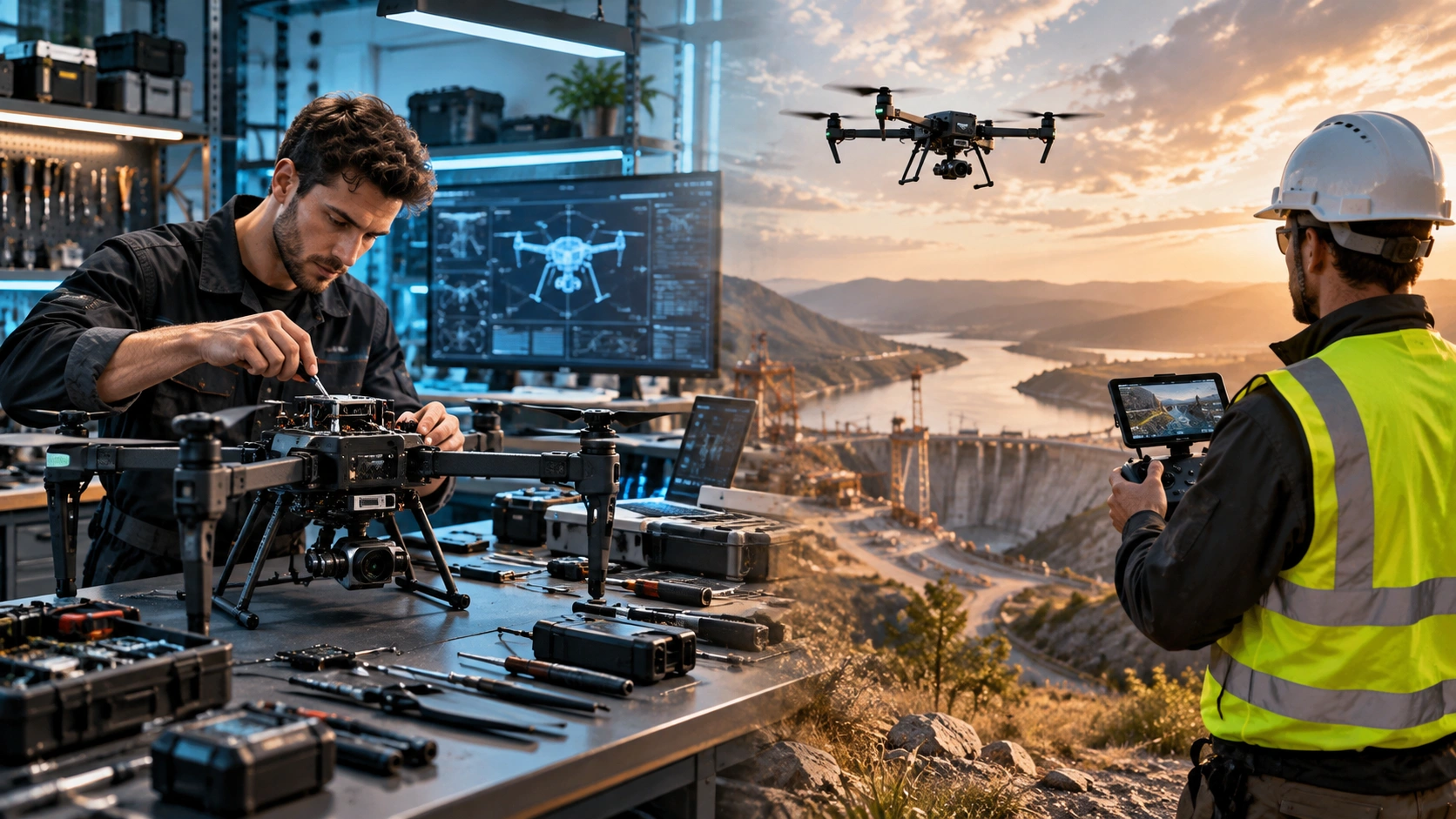
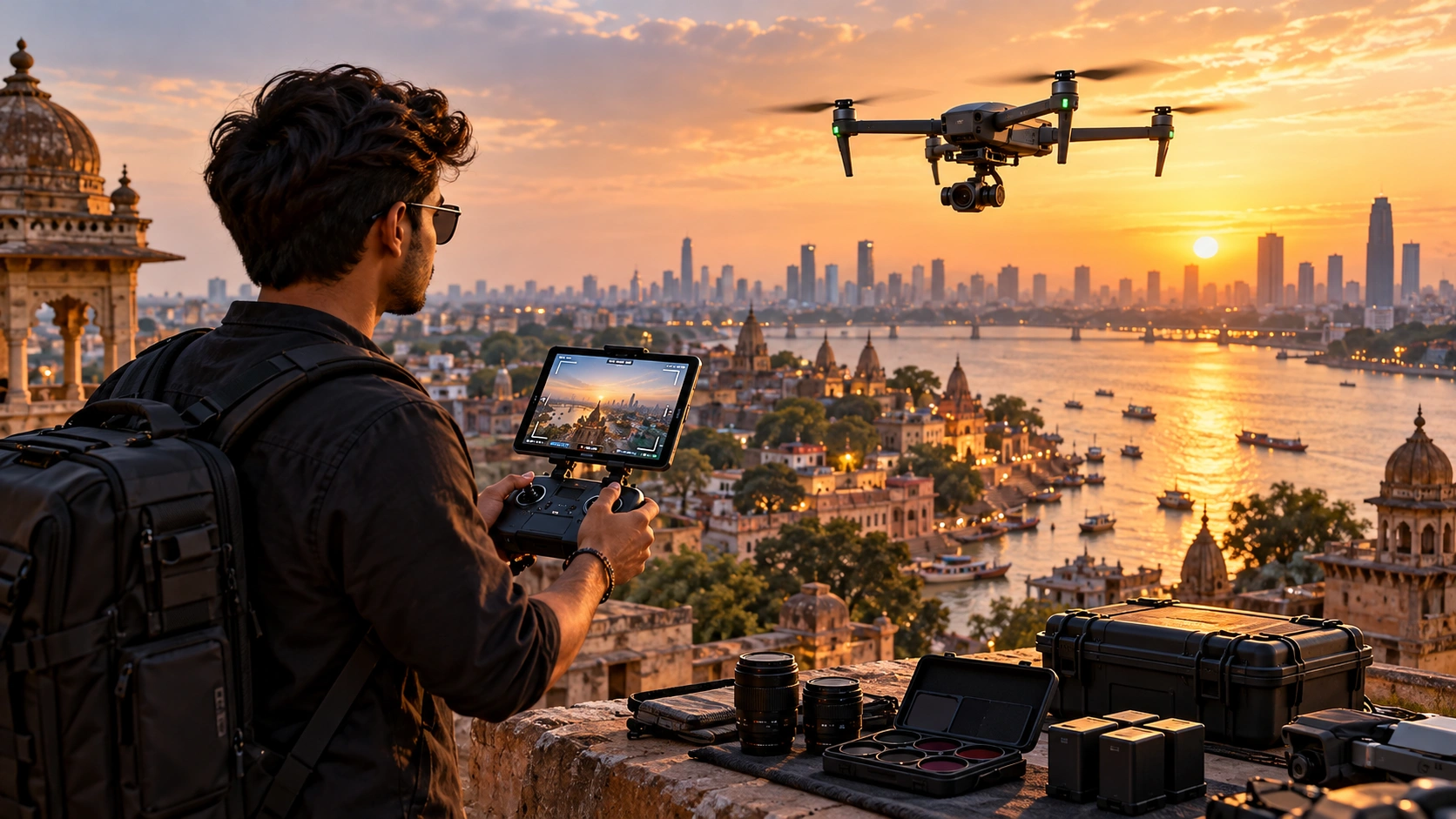
Drone photography and videography have changed the way real estate companies, hotels, tourism brands, filmmakers, event professionals and businesses create visual content.
Aerial footage can showcase a property from a completely different perspective, create cinematic establishing shots, document large projects and provide brands with visuals that are difficult to capture using conventional cameras.
But becoming a professional drone photographer and videographer in India involves more than buying a drone and learning how to fly it.
You need a combination of:
Drone flying skills + Camera skills + Cinematography + Safety + Regulatory knowledge + Practical experience
If you are searching for a drone photography course India, the right training should help you develop both professional drone-operation skills and the creative abilities needed to produce high-quality aerial content.
What Does a Professional Drone Photographer Do?
A professional drone photographer uses drones to capture aerial photographs for commercial, creative or documentation purposes.
Common assignments include:
- Real estate photography
- Hotel and resort photography
- Construction documentation
- Tourism campaigns
- Wedding and event coverage
- Corporate photography
- Infrastructure projects
- Advertising campaigns
- Landscape photography
- Social media content
The work is not simply about getting the drone into the air.
A professional photographer needs to decide:
- Where to position the drone
- Which angle best shows the subject
- What altitude is appropriate
- How to frame the shot
- How lighting affects the image
- When to capture the photograph
- How the image supports the client’s objective
The drone provides the aerial perspective, but composition and creative decision-making determine the quality of the final photograph.
What Does a Professional Drone Videographer Do?
A drone videographer focuses on capturing moving aerial footage for films, advertisements, social media, property videos and other commercial projects.
Typical work can include:
- Cinematic establishing shots
- Real estate videos
- Hotel and resort films
- Tourism videos
- Brand films
- Construction progress videos
- Corporate videos
- Event coverage
- Social media reels
- Promotional campaigns
Professional drone videography requires an understanding of both flight movement and storytelling.
Common Aerial Cinematography Shots
Reveal Shot: The drone rises or moves forward to gradually reveal the subject.
Orbit Shot: The drone moves around a building, person or other subject.
Push-In: The drone gradually moves toward the subject.
Pull-Out: The drone moves away to reveal the surrounding environment.
Top-Down Shot: The camera points directly downward to create a distinctive overhead perspective.
Tracking Shot: The drone follows a moving subject while maintaining an appropriate composition.
The objective is not simply to show that a drone can fly. Each movement should contribute to the story or purpose of the video.
Do You Need a Drone Licence for Professional Photography in India?
The term “drone licence” is commonly used, while India’s current regulatory terminology uses Remote Pilot Certificate (RPC) for applicable remote-pilot certification.
Where remote-pilot certification is applicable, professional drone operators need the appropriate certification for the relevant drone category, sub-category and class.
Professional operators also need to understand requirements relating to:
- Drone registration
- Airspace restrictions
- Flight safety
- Operating limitations
- Insurance
- Site permissions
- Applicable drone category
The exact requirements depend on the drone and operation.
Therefore, buying a camera drone does not automatically mean that you are ready to undertake paid commercial assignments.
Before starting professional work, understand the applicable regulatory requirements for the specific drone and type of operation.
What Is a Drone Photography Course in India?
A drone photography course in India can combine professional drone operation with photography and aerial cinematography skills.
A strong programme should ideally cover two areas.
Drone Operations
This can include:
- Basic flight controls
- Flight planning
- Pre-flight checks
- Weather awareness
- Battery management
- Airspace awareness
- Safety procedures
- Emergency procedures
- Basic drone maintenance
Photography and Videography
Creative training can cover:
- Composition
- Exposure
- Shutter speed
- ISO
- White balance
- Frame rates
- Camera profiles
- ND filters
- Camera movement
- Shot planning
- Storytelling
- Basic post-production
The important point is that drone pilot training and aerial cinematography are related but different skills.
A person can learn to fly a drone safely without necessarily knowing how to create professional cinematic footage.
What Should You Learn in a Drone Photography Course?
A useful course should help you develop several complementary skill sets.
1. Drone Flying Skills
Before learning cinematic movements, you need reliable control of the aircraft.
You should become comfortable with:
- Take-off and landing
- Hovering
- Forward and backward movement
- Sideways movement
- Yaw
- Altitude control
- Turns
- Basic manoeuvres
Consistent and controlled flying is the foundation for professional aerial photography.
2. Camera Operation
A drone camera is still a camera.
You need to understand:
- Exposure
- ISO
- Shutter speed
- White balance
- Resolution
- Frame rate
- Image profiles
- Dynamic range
- ND filters
Understanding these settings gives you greater control over the final image instead of relying entirely on automatic modes.
3. Aerial Cinematography
This is where basic drone operation develops into professional visual storytelling.
You should learn how to plan movements, maintain smooth flight and combine multiple shots into a sequence.
4. Safety and Regulations
Professional drone operators also need to understand:
- Airspace
- Flight restrictions
- Weather
- People and property
- Pre-flight checks
- Emergency procedures
- Site permissions
A technically impressive shot is not worth compromising safety or regulatory compliance.
How Important Is Composition in Drone Photography?
Composition is one of the most important skills in aerial photography.
Aerial images can quickly become repetitive if every photograph is captured from the same height and angle.
Professional composition involves considering:
- Leading lines
- Symmetry
- Patterns
- Scale
- Negative space
- Foreground
- Background
- Subject placement
- Perspective
For example, a real estate photographer may use a property’s driveway, landscaping and surrounding roads to lead the viewer’s eye toward the building.
A tourism photographer may use mountains, coastline, roads or architecture to communicate scale.
The drone provides the perspective, but composition makes the perspective visually effective.
What Equipment Does a Professional Drone Photographer Need?
You do not necessarily need the most expensive drone when starting your career.
The equipment should match the type of work you want to perform.
Drone
Important features can include:
- Stable flight
- High-quality camera
- Reliable transmission
- GPS positioning
- Obstacle sensing
- Suitable battery life
- Manual camera controls
Additional Equipment
Depending on the project, you may also need:
- Extra batteries
- ND filters
- High-speed memory cards
- Spare propellers
- Charging equipment
- Storage or backup devices
Start with equipment appropriate for your skill level and gradually upgrade as your client requirements increase.
What Type of Drone Is Best for Photography?
There is no single “best” drone for every professional photographer.
The right equipment depends on the project.
| Work Type | Important Equipment Consideration |
|---|---|
| Social media content | Compact drone with good camera quality |
| Real estate | High-resolution camera and stable flight |
| Cinematic filmmaking | Camera control and image quality |
| Construction | Reliability and repeatable flight |
| Events | Reliability, safety and image quality |
| Industrial work | Appropriate payload and operational capability |
A cinematic camera drone may be excellent for filmmaking but unsuitable for specialised surveying.
Similarly, a survey drone is not necessarily the best choice for cinematic production.
How to Become a Professional Drone Photographer in India?
A practical career path can look like this:
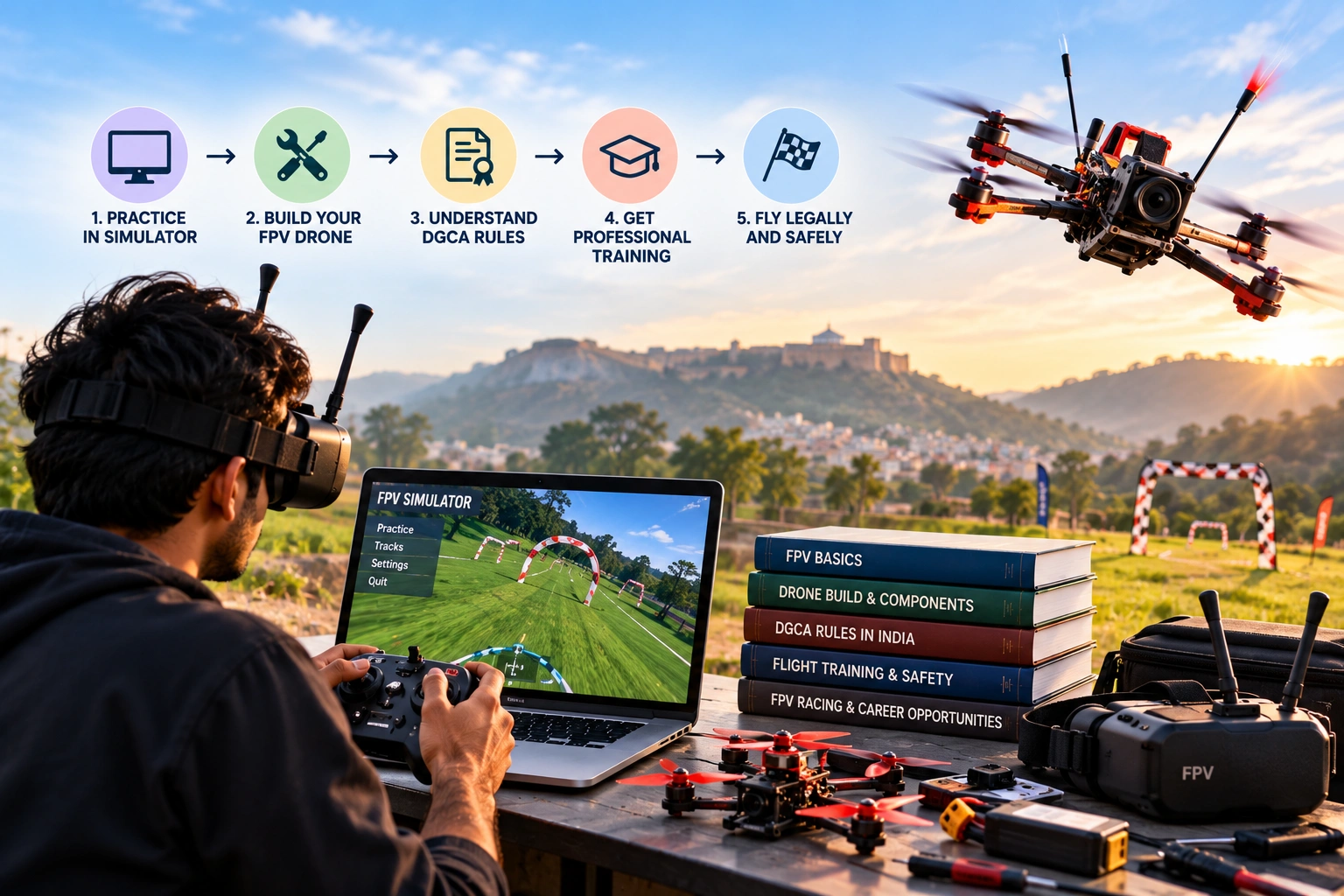
Step 1: Learn Basic Drone Operations
Start by understanding how drones work and develop safe, controlled flight skills.
Step 2: Understand Indian Drone Regulations
Learn about:
- Drone categories
- Remote Pilot Certificate requirements
- Airspace
- DigitalSky
- Registration
- Safety requirements
Step 3: Complete Appropriate Pilot Training
If your intended professional operation requires an RPC, complete the applicable training through an authorised Remote Pilot Training Organisation.
Step 4: Learn Photography and Cinematography
Develop camera and storytelling skills alongside your flying ability.
Step 5: Practise Different Aerial Shots
Practise:
- Reveals
- Orbits
- Tracking shots
- Push-ins
- Pull-outs
- Top-down shots
Step 6: Build a Portfolio
Create sample projects even before getting your first commercial client.
Step 7: Choose a Specialisation
You could specialise in:
- Real estate
- Weddings
- Tourism
- Hotels
- Construction
- Corporate content
- Advertising
- Films
Step 8: Start Building Commercial Experience
Once you have the necessary skills, equipment and compliance in place, approach agencies, production houses, businesses and direct clients.
How to Build a Drone Photography Portfolio?
Your portfolio should demonstrate what you can create for a client rather than simply showing random drone footage.
Real Estate Portfolio
Include:
- Property exteriors
- Entrance shots
- Surrounding area
- Top-down views
- Approach shots
Hotel and Resort Portfolio
Show:
- Property reveals
- Pools
- Landscaping
- Architecture
- Surrounding environment
Construction Portfolio
Show:
- Site overviews
- Progress documentation
- Infrastructure
- Aerial establishing shots
Tourism Portfolio
Include:
- Landscapes
- Roads
- Beaches
- Architecture
- Natural attractions
A strong portfolio demonstrates that you can solve a visual requirement for a client.
How Can You Get Drone Photography Clients in India?
Once you have a portfolio, focus on industries that regularly need aerial content.
Real Estate
Developers, brokers and property marketing companies can use aerial photography and video to showcase properties and surrounding locations.
Hotels and Resorts
Hospitality brands can use aerial footage to showcase their property, amenities and surroundings.
Construction
Construction companies can use drone footage for progress documentation, project updates and marketing.
Tourism
Tourism businesses can use aerial content to showcase destinations and experiences.
Advertising and Production
Advertising agencies and production houses may require specialist drone operators for campaigns, films and branded content.
Instead of positioning yourself only as:
“Drone photographer”
you can develop a more specific offering such as:
“Aerial photography and videography for real estate brands.”
or:
“Drone cinematography for hotels and tourism businesses.”
Specialisation can make your service easier for potential clients to understand.
Drone Photographer vs Drone Videographer: Which Should You Choose?
Both roles overlap, but the creative requirements are different.
| Drone Photographer | Drone Videographer |
|---|---|
| Focuses on still images | Focuses on moving footage |
| Composition is critical | Composition and movement are critical |
| Captures individual frames | Plans complete sequences |
| Useful for property listings | Useful for films and campaigns |
| Photo editing workflow | Video editing and colour grading workflow |
You do not necessarily need to choose only one.
Many professional drone operators offer both photography and videography, which can expand the types of projects they can accept.
What Safety Skills Should a Professional Drone Photographer Have?
A professional shoot should always begin with safety.
Before flying, check:
- Airspace
- Weather
- Flight location
- Obstacles
- People
- Buildings
- Power lines
- Battery condition
- Aircraft condition
- Emergency landing options
You should also consider:
- Client or property permissions
- Privacy
- Local restrictions
- Temporary restrictions
- Airport proximity
- Event-specific restrictions
The goal is to produce excellent imagery without compromising safe and compliant operations.
Why Should You Learn Drone Flying Before Aerial Cinematography?
One common mistake is to focus immediately on cinematic shots without first developing strong flight control.
If the aircraft movement is unstable, even excellent camera settings will not produce professional footage.
A better progression is:
Basic Flight Control
↓
Safe and Consistent Flying
↓
Camera Control
↓
Basic Aerial Shots
↓
Cinematic Movements
↓
Complete Shot Sequences
↓
Client Projects
This approach builds both technical confidence and creative ability.
Where Can You Learn Drone Photography and Videography in India?
When choosing a drone photography course India, look for training that matches your intended career.
SkyGlimps currently offers drone training in Kolkata, including DGCA-Certified Small Category Drone Pilot Training and specialised aerial cinematography training.
Its pilot-training programme covers areas such as drone regulations, flight fundamentals, weather, maintenance, risk assessment, safety, payload operations, simulator practice and practical flying.
For someone interested in professional photography and videography, combining structured pilot training with specialised aerial cinematography skills can provide a stronger foundation than learning cinematic movements alone.
Explore SkyGlimps DGCA-Certified Drone Training
What Should You Check Before Choosing a Drone Photography Course?
Before enrolling in a course, check:
Does It Include Practical Flying?
You should get meaningful hands-on experience rather than learning only through theory.
Does It Cover Drone Regulations?
Professional operators need to understand the applicable Indian drone framework and airspace requirements.
Is the Training Provider Authorised for the Certification Being Offered?
If the course includes an RPC pathway, verify the training organisation’s current authorisation and the scope of the programme.
Does It Teach Aerial Cinematography?
Flying a drone and creating cinematic footage are different skills.
Does It Include Camera Training?
Look for practical exposure to composition, camera settings and shot design.
Does It Provide Real-World Practice?
Practical assignments can help you understand how professional aerial projects are actually planned and executed.
Frequently Asked Questions
A course is not the only way to learn photography, but structured training can help develop flight skills, safety knowledge, camera operation and aerial cinematography systematically. Where pilot certification is applicable, the required training pathway must also be followed.
The requirement depends on the drone and operation. Where an RPC is applicable, the pilot needs the appropriate Remote Pilot Certificate and must operate within the applicable category, sub-category and class.
Yes. Drone photographers and videographers can work with real estate companies, hotels, tourism brands, construction companies, advertising agencies, production houses and other businesses requiring aerial content.
A strong programme should cover drone flying, safety, regulations, camera operation, composition, aerial shot design, flight planning and practical experience. Specialised cinematography training can also be added.
It can be a strong career option for people who combine drone-piloting skills with photography, cinematography, editing and client-management abilities. Specialising in a particular industry can make it easier to build a professional portfolio and attract clients.
Start Building Your Career in Drone Photography and Videography
Becoming a professional drone photographer or videographer in India requires more than learning how to control a drone.
The strongest professionals combine:
Flying Skills + Certification + Camera Skills + Cinematography + Safety + Portfolio + Business Skills
Start with the fundamentals.
Learn to fly safely.
Understand India’s drone regulations.
Complete the applicable pilot certification pathway.
Learn how to control the camera.
Practise cinematic movements.
Build a portfolio.
Then specialise in an industry where your aerial content can solve a real business or creative requirement.
A drone photography course India search should therefore not be limited to finding the cheapest or shortest programme. Look for training that provides practical flying experience, regulatory understanding and the creative skills required to produce professional aerial content.
SkyGlimps provides drone training in Kolkata for learners interested in professional drone operations, including DGCA-certified pilot training and specialised aerial cinematography training.
The long-term opportunity is not simply to become someone who can fly a drone.
It is to become a professional who can take a client’s brief, plan a safe flight, capture compelling aerial visuals and deliver content that is genuinely useful.
That is what turns drone flying into a professional photography and videography career.