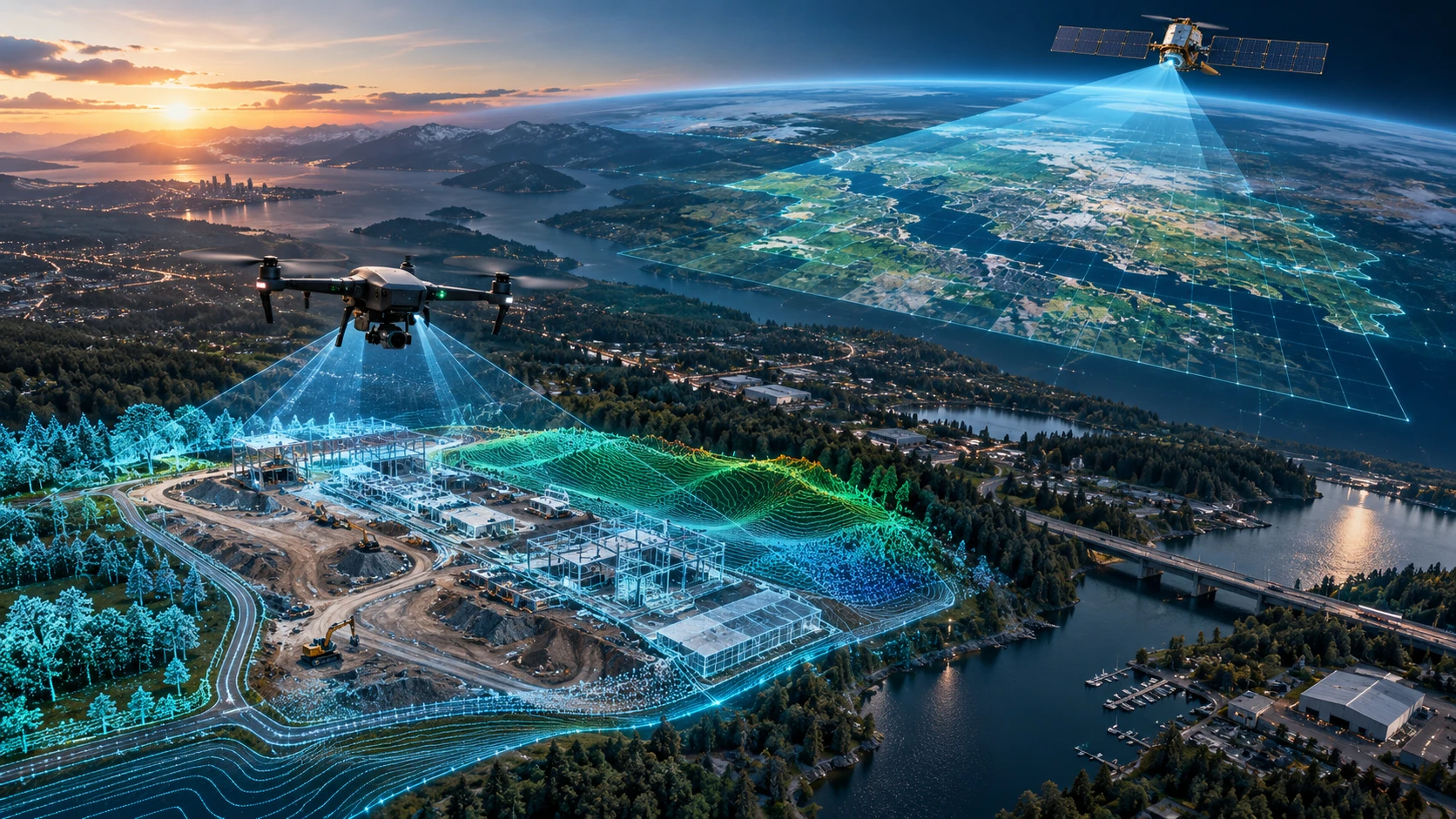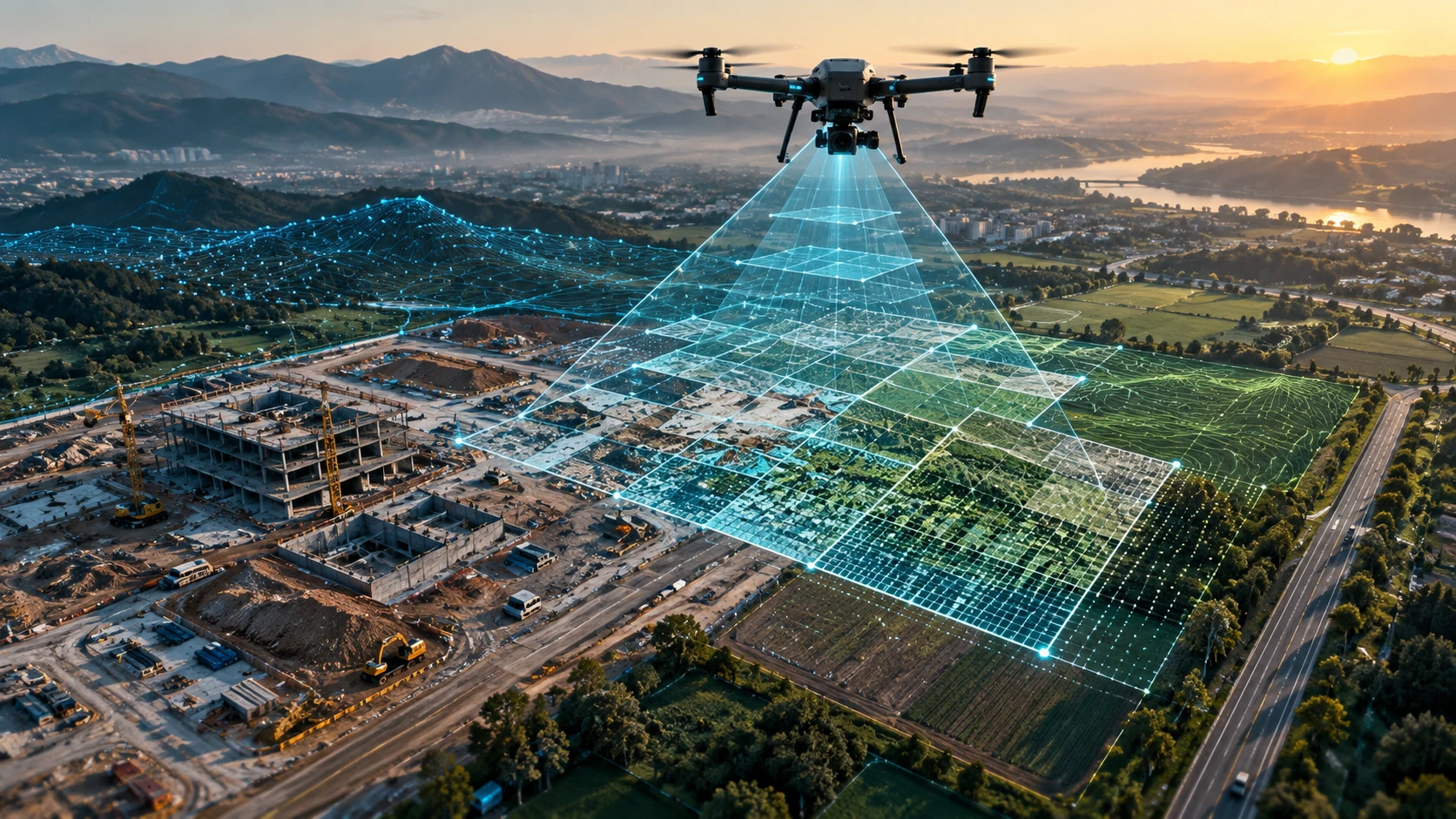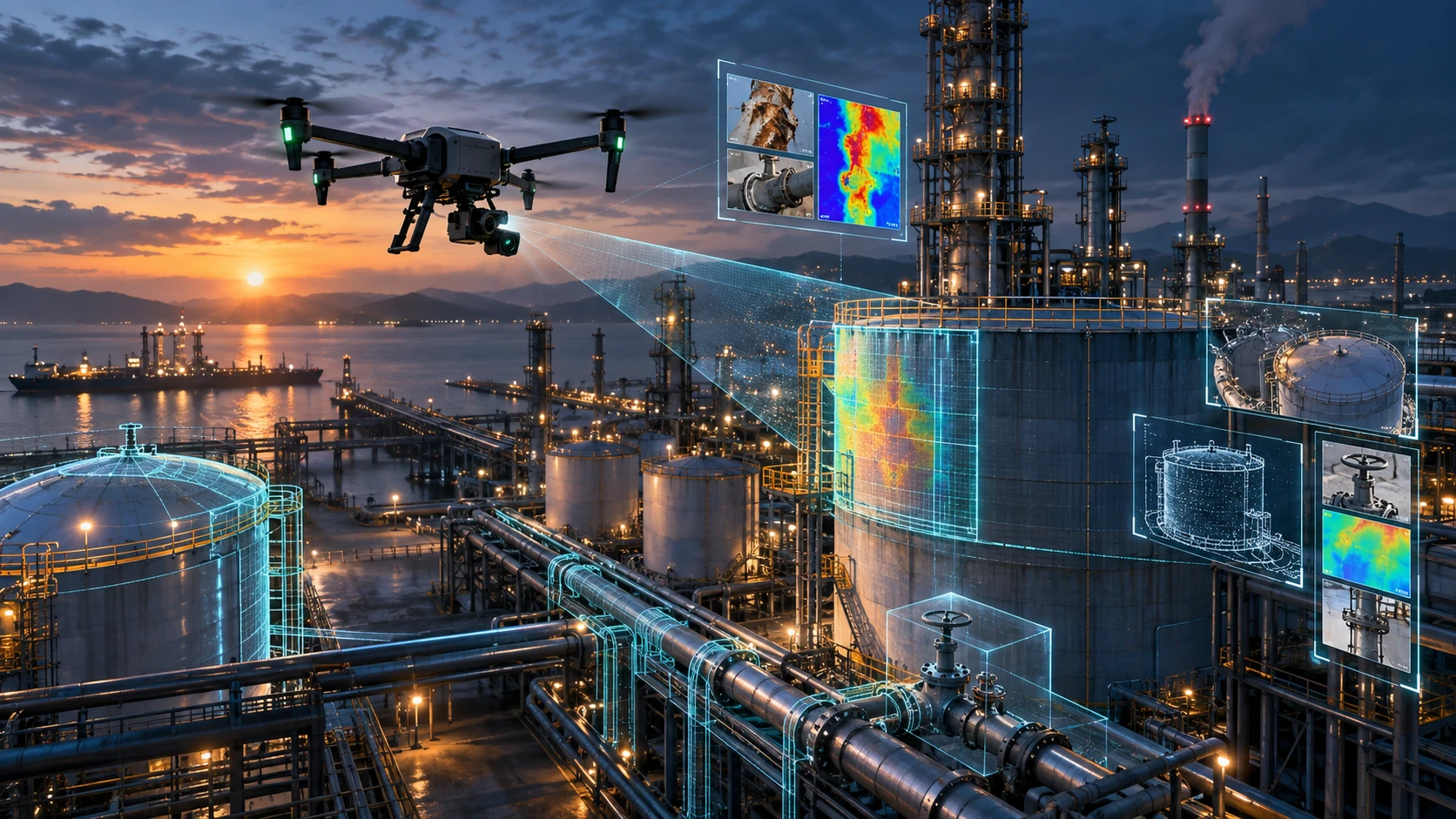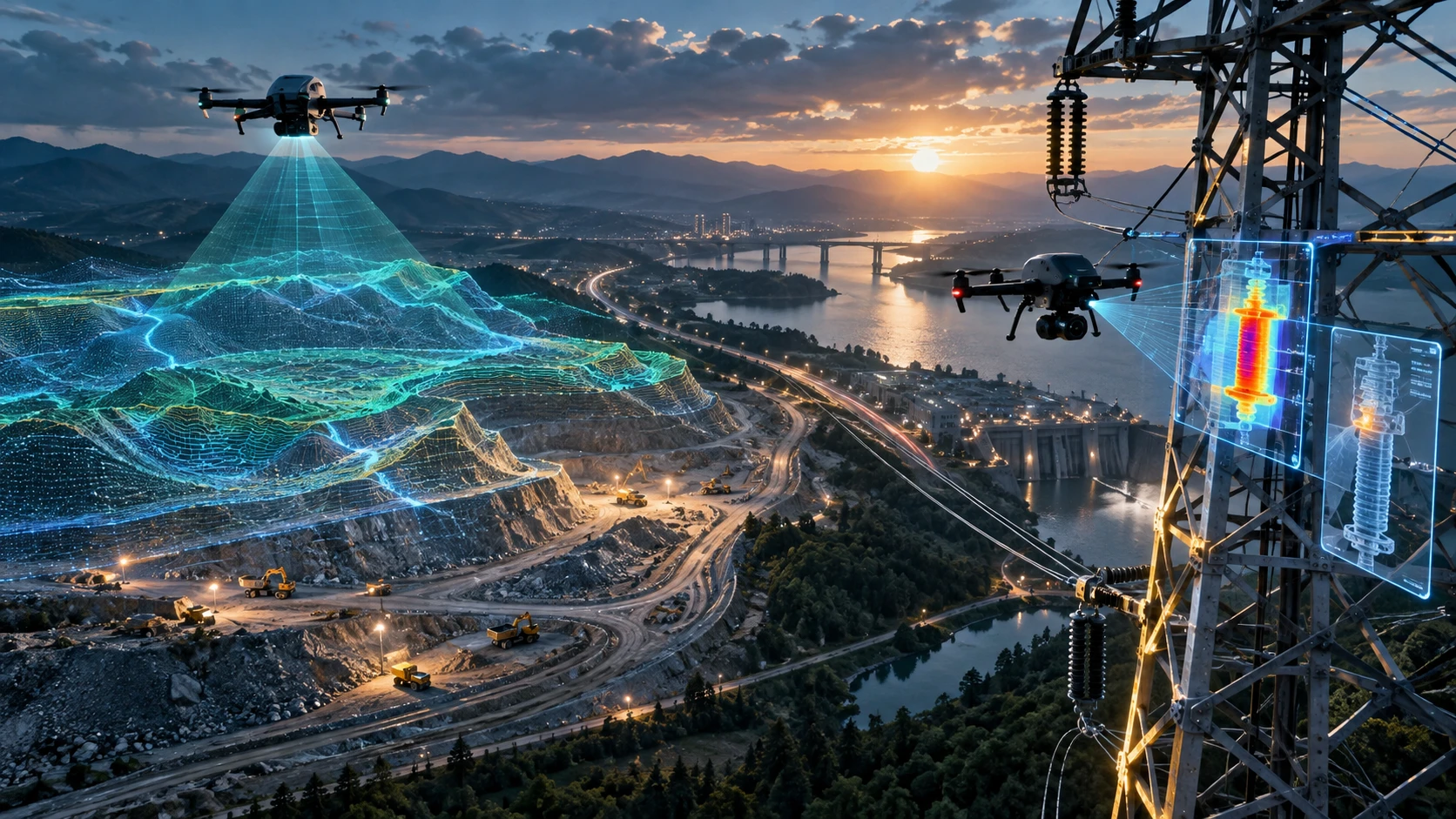
A DGCA small category course trains eligible candidates to operate small category drones professionally in India. In India’s drone classification, small category drones fall above micro drones and up to 25 kg. For commercial drone work, learners complete training through a DGCA-authorised Remote Pilot Training Organisation and receive a Remote Pilot Certificate after successfully meeting the training and assessment requirements.
For students, survey professionals, entrepreneurs, agriculture service providers, media teams, and enterprise staff, small category drone training is one of the most relevant pathways because many professional drone applications use drones in this class. These include mapping, agriculture, inspections, construction progress monitoring, aerial documentation, and infrastructure work.
This guide explains what to expect before, during, and after a DGCA small category drone pilot course in India.
What is a DGCA small category course?
A DGCA small category course is a structured drone pilot training programme for candidates who want to operate small category drones professionally. It combines theory, simulator exposure, practical flying, safety procedures, and assessment under an authorised training framework.
The small category generally covers drones weighing more than 2 kg and up to 25 kg. This category is widely relevant because many professional drones used for mapping, agriculture, inspection, and enterprise work fall within this operating range.
A small category course is not a casual flying class. It is designed to help candidates understand drone operations as an aviation activity. That means learners must study regulations, safety, weather, airspace, equipment checks, emergency handling, and responsible flight conduct.
A good course prepares candidates for:
- Safe drone handling
- Commercial drone operations
- Site-level flight planning
- Risk assessment
- Practical flying confidence
- Regulatory awareness
- Remote Pilot Certificate readiness
- Industry-specific drone applications
Skyglimps Technologies LLP offers DGCA-certified drone pilot training in Kolkata for learners who want a structured professional training route.
Who is eligible for a DGCA small category course?
To join a DGCA small category course for professional drone pilot certification in India, a candidate must be at least 18 years old and should have passed Class 10 or equivalent. The candidate must complete training and assessment through an authorised Remote Pilot Training Organisation.
The standard eligibility requirements include:
| Requirement | What it means |
|---|---|
| Minimum age | 18 years |
| Education | Class 10 pass or equivalent |
| Training route | DGCA-authorised RPTO |
| Certification outcome | Remote Pilot Certificate after successful completion |
| RPC validity | 10 years from the date of issue |
| Common training duration | Small category courses are commonly completed in 5–7 days |
Candidates should keep documents ready before admission. These usually include identity proof, address proof, education proof, photographs, and other documents requested by the training organisation.
The correct certification term in 2026 is Remote Pilot Certificate, commonly called RPC. Many people still search for “drone pilot licence,” but the professional certificate issued through the current framework is the RPC.
What happens before the training starts?
Before the training starts, the institute checks eligibility, collects documents, explains the course structure, and prepares candidates for theory and practical sessions. A well-organised RPTO will make the process clear before the first training day.
Before enrolling, candidates should confirm:
- Course category and drone class
- Batch dates
- Training duration
- Required documents
- Fee inclusions
- Practical flying structure
- Assessment process
- Certificate process
- Location and reporting time
- Safety requirements for field sessions
Candidates should also understand their own objective. A student seeking a drone pilot career, a surveyor planning mapping work, and an entrepreneur entering agriculture services may need different post-certification learning paths.
For beginners, it is useful to ask what happens after certification. Pilot training teaches the foundation. Specialisation in mapping, inspections, agriculture, FPV, cinematography, or enterprise workflows may require additional practical learning.
If a learner is not ready for full pilot certification, a 1-day beginner drone workshop can provide basic exposure before joining a full professional course.
What theory topics are covered in training?
Theory training teaches the rules, safety concepts, flight planning knowledge, and operational awareness needed to fly drones responsibly. A professional drone pilot must understand both the aircraft and the environment in which it operates.
Theory sessions commonly cover:
- Drone rules and regulatory basics
- Airspace awareness
- Drone categories and classifications
- Basic principles of flight
- Drone components and systems
- Weather and wind impact
- Flight planning
- Site risk assessment
- Battery safety
- Emergency procedures
- Maintenance awareness
- Human factors
- Privacy and responsible operations
- Pre-flight and post-flight checks
The purpose of theory training is not to overload students with technical jargon. The goal is to help candidates make safe decisions in real-world conditions.
For example, a trained pilot should know when weather conditions are unsuitable, how to check the site environment, why crowd safety matters, and what to do if the drone behaves unexpectedly. This is what separates professional training from casual flying.
What happens during simulator and practical flying?
Simulator and practical flying sessions help candidates build control, confidence, orientation awareness, and emergency response skills under supervision. This is where theory becomes real flying discipline.
Simulator training allows candidates to practise control inputs before operating an actual drone. It helps beginners understand orientation, movement, altitude control, and response timing in a safer learning environment.
Practical flying usually includes:
- Drone inspection before flight
- Take-off and landing
- Hovering practice
- Forward and backward movement
- Left and right movement
- Yaw and orientation control
- Basic flight patterns
- Safe distance management
- Battery monitoring
- Return-to-home awareness
- Emergency response practice
- Post-flight checks
During field flying, instructors observe the candidate’s control, discipline, and ability to follow safety instructions. A good student is not the one who flies aggressively. A good student is the one who flies safely, calmly, and predictably.
For professional drone work, safe operation is more valuable than flashy movement. Whether the pilot later works in mapping, agriculture, inspection, or cinematography, disciplined flying is the foundation.
How is assessment done in a DGCA small category course?
Assessment in a DGCA small category course checks whether the candidate has understood theory, safety procedures, and practical drone operation. Candidates must complete the required training and assessment process before receiving the Remote Pilot Certificate.
The assessment process may include theory evaluation, practical flying evaluation, instructor observation, and completion of required training records. Candidates are expected to show safe flying behaviour, basic control ability, regulatory awareness, and disciplined decision-making.
A candidate should be prepared to demonstrate:
- Pre-flight checks
- Safe take-off
- Stable control
- Basic manoeuvres
- Controlled landing
- Emergency awareness
- Battery and equipment discipline
- Understanding of operating limitations
- Respect for safety instructions
The purpose of assessment is not only to pass a test. It is to ensure the pilot can operate responsibly in real-world conditions. Drone flying involves people, property, airspace, equipment, and site-level risk. Assessment helps confirm that the candidate has the baseline skill and awareness required for professional operation.
What certificate do you get after completing the course?
After successfully completing the required RPTO training and assessment, eligible candidates receive a Remote Pilot Certificate. The Remote Pilot Certificate is valid for 10 years from the date of issue unless suspended or cancelled under applicable rules.
The RPC is the pilot’s professional certification record. It is important for drone pilot jobs, commercial drone services, company assignments, enterprise projects, and government-linked work.
After receiving the RPC, candidates should keep digital and physical records safely. Employers, clients, or project partners may ask for proof of certification before assigning drone work.
However, the certificate is the beginning, not the end. A certified pilot should continue learning about specific drone applications. For example, a candidate interested in survey work can continue with a drone mapping and surveying course. A candidate interested in company-specific workflows may explore customized drone training.
What career paths can follow small category drone training?
Small category drone training can support career paths in surveying, agriculture, inspections, infrastructure monitoring, construction documentation, aerial media, and enterprise drone operations. The strongest career growth happens when pilots combine certification with domain skills.
Career paths after training may include:
- Certified drone pilot
- Drone survey assistant
- Mapping and photogrammetry operator
- Agriculture drone service provider
- Construction monitoring pilot
- Infrastructure documentation pilot
- Industrial inspection support pilot
- Mining and stockpile monitoring support
- Utility inspection support
- Aerial cinematography operator
- Drone entrepreneur
In Kolkata, West Bengal, and Eastern India, drone skills are relevant for infrastructure, agriculture, mining, irrigation, power utilities, industrial sites, smart city projects, and public-sector documentation.
A certified pilot who understands only basic flying may have limited opportunities. A certified pilot who also learns mapping, data capture, safety planning, industry workflows, and client communication has better career potential.
How should you prepare for the course?
Candidates should prepare for a DGCA small category course by arranging documents, understanding basic drone terms, reviewing safety expectations, and arriving with a professional mindset. Good preparation helps students get more value from the short training duration.
Before the course, candidates should:
- Keep identity and education documents ready
- Read basic drone terminology
- Understand that safety is the priority
- Wear comfortable outdoor training clothing
- Follow the institute’s reporting instructions
- Carry required personal items
- Avoid treating flying as a hobby stunt
- Ask questions during theory sessions
- Listen carefully during field training
During the course, students should focus on fundamentals. Smooth control, safety awareness, checklist discipline, and calm decision-making matter more than speed.
A small category drone pilot course is intensive. Since the training is commonly completed within 5–7 days, candidates should treat every session seriously. The best results come from active participation in theory, simulator practice, practical flying, and assessment preparation.
Why choose Skyglimps Technologies for drone pilot training in Kolkata?
Skyglimps Technologies LLP is a Kolkata-based drone services company and DGCA-certified Remote Pilot Training Organisation serving learners, government teams, and enterprise clients across Eastern India. The company supports both professional drone training and drone service workflows.
Skyglimps Technologies, a DGCA-certified RPTO in Kolkata, is positioned for candidates who want structured pilot training with exposure to real drone industry applications. Its work across surveying, mapping, inspections, surveillance, documentation, and related workflows helps learners understand how drone skills are used beyond classroom flying.
For students, engineers, entrepreneurs, enterprise staff, and institutional teams in Kolkata, New Town, West Bengal, and Eastern India, local access to an RPTO can make the training process more convenient.
If your goal is to become a certified professional drone pilot, start with the correct category, the correct training route, and the correct certification process.
FAQ: DGCA Small Category Course
A DGCA small category course trains eligible candidates to operate small category drones professionally. It includes theory, simulator exposure, practical flying, safety training, assessment, and the Remote Pilot Certificate pathway.
Small category drones generally weigh more than 2 kg and up to 25 kg. This category is widely used in professional drone work such as mapping, agriculture, inspections, and infrastructure monitoring.
A candidate must be at least 18 years old and should have passed Class 10 or equivalent. The training must be completed through a DGCA-authorised RPTO.
Small category drone pilot training is commonly completed in 5–7 days. The schedule includes theory, simulator exposure, practical flying, and assessment-related training.
After successful training and assessment, eligible candidates receive a Remote Pilot Certificate, or RPC. The RPC is valid for 10 years from the date of issue
Yes. A DGCA small category course includes supervised practical flying. Candidates learn take-off, landing, hovering, basic manoeuvres, safety checks, and emergency response.
The course provides the certification foundation for professional drone operations. Career growth also depends on domain skills such as mapping, agriculture, inspections, cinematography, and field experience.
Start your small category drone training journey
A DGCA small category course is the right pathway for learners who want to move from basic drone interest to professional pilot capability. It teaches regulations, safety, flight planning, simulator handling, practical flying, and assessment readiness in a structured format.
For students, professionals, entrepreneurs, and enterprise teams in Kolkata, West Bengal, and Eastern India, small category drone training can become the foundation for careers in mapping, agriculture, inspections, infrastructure monitoring, and drone services.
To begin your training journey, connect with Skyglimps Technologies LLP through the DGCA-certified drone pilot training page and confirm the next batch, eligibility, documents, course structure, and current fee details.