Drone pilot salary India ranges in 2026 depend on certification, flying skill, project experience, industry specialisation, and the type of employer. Fresh certified drone pilots commonly start in entry-level operational roles, while pilots with mapping, agriculture, inspection, LiDAR, GIS, or project-management skills can earn higher income over time.
DGCA certification is the starting point, not the full career. In India, the correct certificate for eligible professional drone pilots is the Remote Pilot Certificate, or RPC. It is issued after training and assessment through a DGCA-authorised Remote Pilot Training Organisation.
For students, engineers, surveyors, agriculture entrepreneurs, media professionals, and enterprise staff in Kolkata, West Bengal, and Eastern India, drone pilot training can open career paths across infrastructure, surveying, farming, inspections, construction monitoring, public safety, and aerial documentation.
What is the average drone pilot salary India in 2026?
A beginner drone pilot salary India range is commonly around ₹15,000 to ₹35,000 per month for entry-level field roles, while trained pilots with stronger technical skills can move toward ₹35,000 to ₹60,000+ per month. Higher earnings usually come from specialisation, field experience, client handling, and project responsibility.
Salary should be understood as a range, not a fixed promise. Drone pilot income varies widely because the role itself varies widely. A beginner flying under supervision for basic operations is not paid the same as a pilot who can manage mapping missions, process data, coordinate survey teams, or handle enterprise project documentation.
Indicative 2026 salary bands look like this:
| Career stage | Indicative monthly range | Typical profile |
|---|---|---|
| Trainee / assistant pilot | ₹12,000–₹20,000 | Learning field operations under supervision |
| Fresh certified drone pilot | ₹15,000–₹35,000 | Handles basic flying and field support |
| Skilled drone pilot | ₹30,000–₹50,000 | Has field experience and better mission control |
| Mapping / inspection pilot | ₹40,000–₹70,000+ | Adds survey, GIS, inspection, or data skills |
| Lead pilot / operations coordinator | ₹60,000+ | Handles teams, planning, clients, and projects |
| Entrepreneur / freelancer | Variable | Depends on projects, equipment, market, and sales |
The best way to grow salary is to move beyond “I can fly a drone” and become a professional who can solve a business problem using drone data.
Does DGCA certification increase drone pilot career value?
DGCA certification increases career value because it gives the pilot a recognised training foundation for professional drone operations. Employers and clients prefer trained pilots because commercial drone work involves safety, compliance, documentation, and site-level responsibility.
In 2026, the correct certification term is Remote Pilot Certificate. A candidate must complete training and assessment through a DGCA-authorised RPTO. The RPC is valid for 10 years from the date of issue unless suspended or cancelled under applicable rules.
DGCA certification helps because it shows that the pilot has been trained in:
- Drone regulations and operational awareness
- Airspace basics
- Flight planning
- Weather and site risk assessment
- Simulator and practical flying
- Emergency procedures
- Battery and equipment safety
- Pre-flight and post-flight checks
- Responsible drone operation
Skyglimps Technologies LLP offers DGCA-certified drone pilot training in Kolkata for learners who want a structured route into professional drone operations.
Certification does not automatically guarantee a high salary. It makes the candidate eligible and credible. Income growth depends on how quickly the pilot builds real field skills.
Which drone pilot jobs pay better in India?
Drone pilot jobs pay better when the role requires technical judgement, data quality, safety responsibility, and sector-specific knowledge. Mapping, LiDAR, inspections, agriculture spraying, infrastructure monitoring, and enterprise drone operations generally offer better growth than basic flying-only roles.
Better-paying roles often require more than manual control of the drone. They require planning, deliverable understanding, field discipline, client communication, and sometimes software or GIS knowledge.
High-growth drone career paths include:
Drone survey and mapping pilot
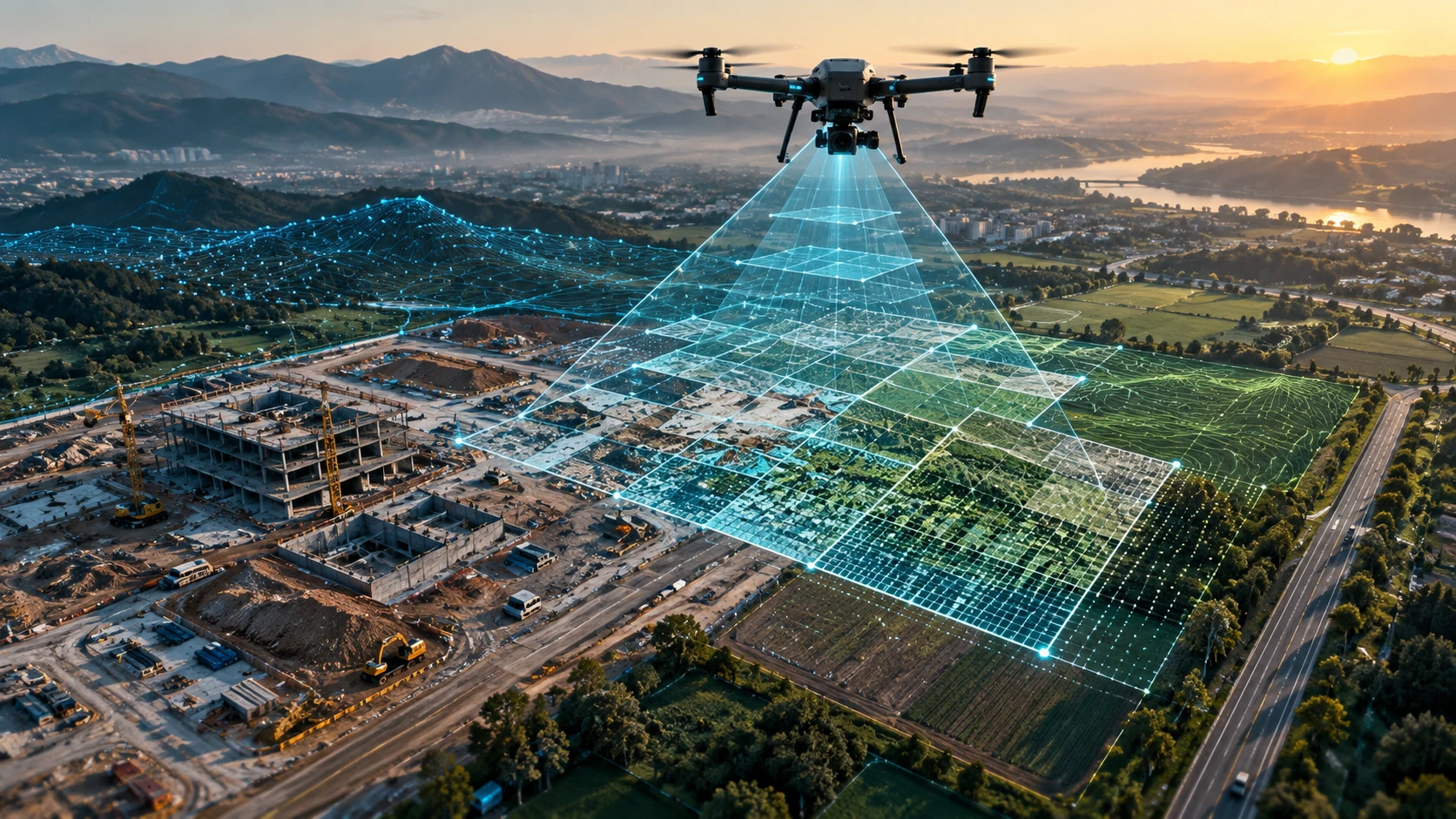
A mapping pilot captures aerial data for orthomosaics, contours, DEM, DSM, point clouds, and GIS-ready outputs. This role is valuable for land, infrastructure, construction, mining, irrigation, and planning projects.
Learners interested in technical mapping can explore a drone mapping and surveying course after pilot certification.
Agriculture drone pilot
Agriculture drone pilots may work in spraying, crop monitoring, farm mapping, and precision agriculture support. This can be a strong career route in agricultural regions where farmers, FPOs, agri-service companies, and institutions use drones.
Inspection drone pilot
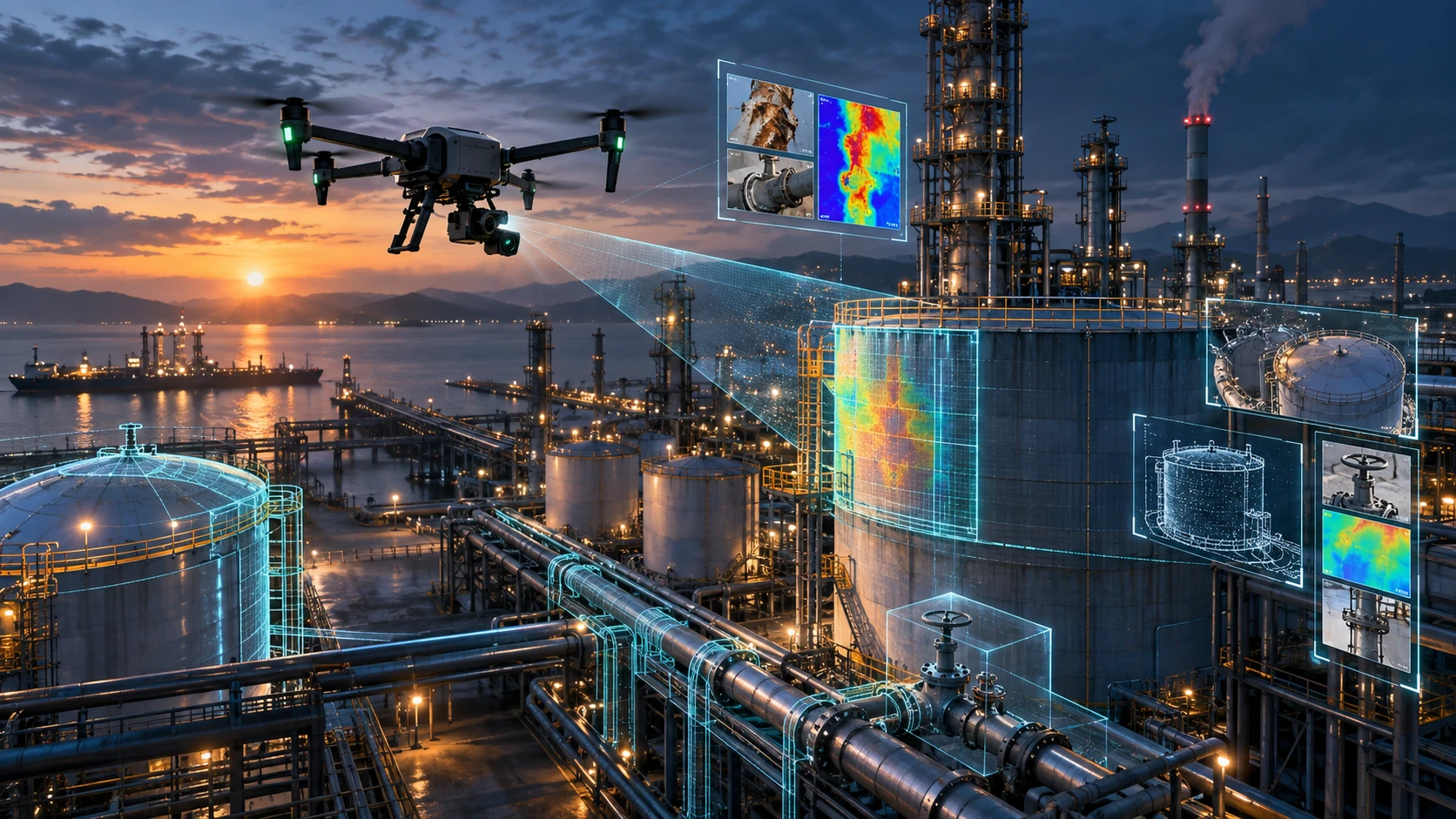
Inspection pilots support power, solar, industrial, construction, and utility projects. These roles require safe flying near assets, understanding inspection objectives, and capturing usable visual or thermal data.
Infrastructure monitoring pilot
Infrastructure pilots support roads, bridges, buildings, canals, rail corridors, mining sites, and construction projects. They often work with engineers, contractors, and project managers.
Drone instructor or trainer
Experienced certified pilots with teaching ability may move into training roles. Instructor roles require strong fundamentals, communication skills, and discipline.
What skills increase drone pilot salary in India?
Drone pilot salary grows faster when the pilot adds mapping, data processing, GIS, inspection, agriculture, safety planning, and client communication skills. Flying is the base skill; specialisation creates income growth.
A beginner should build skills in layers.
First, become a safe pilot. Learn orientation control, checklist discipline, emergency response, weather awareness, and safe landing habits.
Second, understand professional use cases. Drone work is not the same in agriculture, construction, mining, media, or inspections. Each sector has different data needs.
Third, learn deliverables. A professional pilot should understand terms such as orthomosaic, contour map, DEM, DSM, point cloud, inspection report, mission plan, and flight log.
Fourth, build software awareness. For mapping and surveying roles, knowledge of photogrammetry, GIS, CAD-ready files, and data formats can improve career value.
Important salary-growth skills include:
- Safe mission planning
- Site risk assessment
- Ground control awareness
- Mapping and photogrammetry basics
- GIS and CAD workflow understanding
- Drone inspection methods
- Agriculture spraying workflow
- Data handover and reporting
- Client communication
- Team coordination
- Equipment maintenance awareness
The pilots who grow fastest are usually those who combine flying discipline with business-use understanding.
What industries hire certified drone pilots?
Certified drone pilots are hired across surveying, infrastructure, agriculture, construction, inspections, mining, media, public safety, and enterprise operations. Demand is growing because drones help organisations collect data faster, safer, and at larger scale.
In India, drone use cases are expanding across:
| Industry | Drone pilot role |
| Surveying and mapping | Aerial data capture for maps and models |
| Construction | Progress monitoring and site documentation |
| Agriculture | Spraying, crop monitoring, and field mapping |
| Mining | Stockpile, terrain, and earthwork monitoring |
| Power and utilities | Asset and corridor inspection support |
| Infrastructure | Roads, canals, bridges, and project monitoring |
| Real estate | Project visuals and progress updates |
| Media and events | Aerial cinematography |
| Government projects | Documentation, monitoring, planning support |
| Disaster management | Rapid visual assessment and situational awareness |
For learners in Kolkata and Eastern India, local opportunities can come from infrastructure, urban development, mining belts, irrigation, agriculture, utilities, and enterprise documentation.
Skyglimps Technologies LLP provides 2D Surveying & Mapping services for professional mapping projects where trained pilots and structured data workflows are important.
Can a fresher become a drone pilot after DGCA certification?
Yes, a fresher can begin a drone pilot career after DGCA certification, but the first role is often entry-level and field-oriented. Freshers should focus on safe flying, assisting senior pilots, learning project workflows, and building a portfolio of practical experience.
A fresher should not expect immediate expert-level income. The first stage is about building credibility.
A practical fresher roadmap looks like this:
- Complete DGCA-certified drone pilot training.
- Get the Remote Pilot Certificate.
- Practise safe flying under guidance.
- Learn basic field coordination.
- Assist in real survey, inspection, or documentation projects.
- Learn mapping or inspection deliverables.
- Build a project portfolio.
- Add industry-specific skills.
- Apply for better technical roles.
- Move into lead pilot, data operator, or project coordinator roles.
Freshers who treat the RPC as the final goal may stay limited. Freshers who treat the RPC as the beginning can grow into stronger technical profiles.
For beginners who are not yet ready for full certification, a 1-day beginner drone workshop can provide basic exposure before choosing a full training path.
Is freelancing profitable for drone pilots in India?
Drone freelancing can be profitable, but income is highly variable because it depends on equipment, project type, client acquisition, permissions, travel, insurance, processing skills, and business discipline. Freelancing is not only a flying job; it is a service business.
A freelance drone pilot may earn from:
- Land mapping projects
- Construction progress shoots
- Agriculture spraying assignments
- Real estate aerial visuals
- Event and media work
- Industrial inspection support
- Mining and earthwork documentation
- Infrastructure monitoring
- Training support
- Government or contractor assignments
Freelancing can pay well when the pilot owns or accesses the right equipment, understands project pricing, delivers professional outputs, and can sell services consistently. It can also be difficult if the pilot has no network, no data-processing skills, no compliant workflow, or no clear service positioning.
For most beginners, it is better to gain experience with a company, senior pilot, survey firm, agriculture service provider, or drone services team before depending fully on freelance income.
How can drone pilots grow salary after certification?
Drone pilots can grow salary after certification by specialising in high-value use cases, learning data workflows, improving safety discipline, and gaining field experience across real projects. The fastest growth comes from becoming useful to engineers, project managers, farmers, inspectors, and enterprise teams.
Here are strong growth paths:
Add mapping and survey skills
Mapping pilots who understand flight planning, image overlap, ground control, orthomosaics, contours, and GIS outputs have stronger earning potential than pilots who only fly manually.
Learn inspection workflows
Inspection work requires careful flying, asset understanding, and clear reporting. Pilots who can support thermal or RGB inspection projects can build higher-value profiles.
Build agriculture operations experience
Agriculture drone work can include spraying, route planning, chemical safety, farm coordination, and maintenance. This path can be strong in regions with active farming demand.
Learn data processing
A pilot who can capture and process data is more valuable than a pilot who only captures data. Processing skills improve independence and employability.
Develop client communication
A pilot who can explain project scope, safety needs, deliverables, timelines, and limitations becomes more valuable to employers and clients.
Skyglimps also offers customized drone training for teams and organisations that need role-specific drone skill development.
Why choose Skyglimps Technologies for drone pilot training in Kolkata?
Skyglimps Technologies LLP is a Kolkata-based drone services company and DGCA-certified Remote Pilot Training Organisation serving learners, government teams, and enterprise clients across Eastern India. The company supports professional drone training as well as drone service workflows.
Skyglimps Technologies, a DGCA-certified RPTO in Kolkata, is positioned for learners who want structured training backed by practical drone industry exposure. Its work across surveying, mapping, inspections, surveillance, documentation, and related workflows helps candidates understand how drone skills are used beyond basic flying.
For students, engineers, entrepreneurs, enterprise staff, and institutional teams in Kolkata, New Town, West Bengal, and Eastern India, training with a local RPTO can make access, practical sessions, documents, and follow-up communication more convenient.
FAQ: Drone Pilot Salary India
Fresh drone pilots in India commonly start around ₹15,000 to ₹35,000 per month in entry-level roles. Salary depends on certification, location, employer, project type, and practical skill.
Yes, a skilled drone pilot can reach ₹50,000 per month or more with experience, mapping skills, inspection knowledge, agriculture workflows, data processing ability, and project responsibility.
No. DGCA certification gives a recognised foundation, but jobs depend on skill, experience, sector knowledge, communication, location, and available opportunities.
Mapping, LiDAR, inspections, agriculture spraying, infrastructure monitoring, and drone operations coordination usually offer better growth than basic flying-only roles.
Freelancing can be profitable for pilots who have equipment access, compliance knowledge, client network, pricing skill, and deliverable capability. Income is variable and project-based.
The correct certification is the Remote Pilot Certificate, or RPC. It is issued after eligible candidates complete training and assessment through a DGCA-authorised RPTO.
The Remote Pilot Certificate is valid for 10 years from the date of issue unless suspended or cancelled under applicable rules.
Build a drone career beyond basic flying
Drone pilot salary India ranges are growing with the professional use of drones across surveying, agriculture, inspections, construction, infrastructure, mining, utilities, and public-sector projects. But salary growth does not come from certification alone.
The best career path is to start with DGCA-certified pilot training, build safe flying habits, gain field experience, and add high-value skills such as mapping, GIS, agriculture operations, inspections, LiDAR, reporting, and client communication.
If you want to begin a drone pilot career in Kolkata, West Bengal, or Eastern India, connect with Skyglimps Technologies LLP through the DGCA-certified drone pilot training page and confirm the next batch, eligibility, documents, course structure, and current fee details.