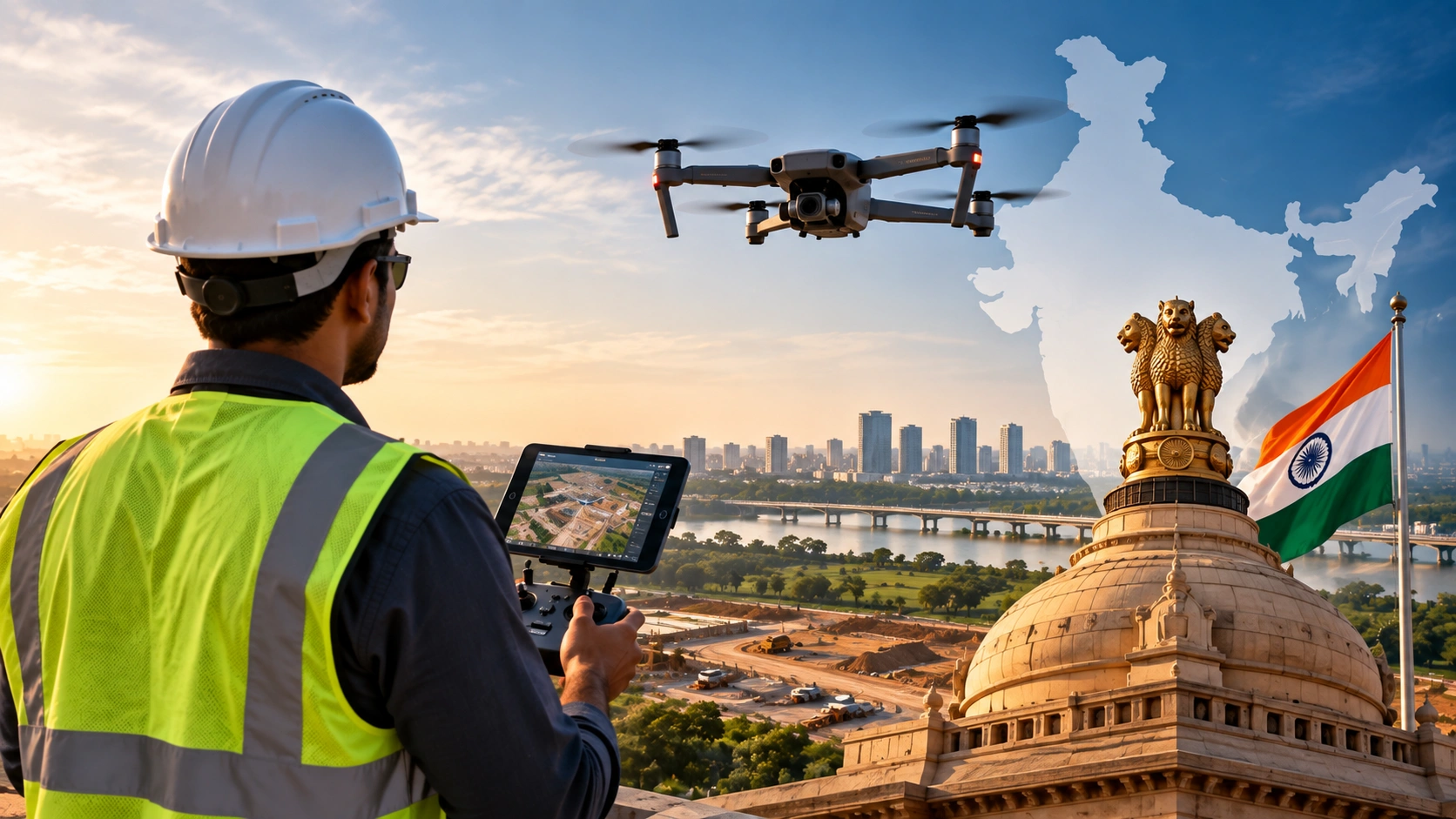
If you are asking, “Do I need a drone licence in India?”, the answer depends mainly on the type of drone you operate and how you use it.
There is an important terminology point first: India no longer uses the old Remote Pilot Licence framework. The Drone (Amendment) Rules, 2022 replaced the licence terminology with Remote Pilot Certificate (RPC), issued through the authorised remote pilot training framework. So while people commonly search for “drone licence” or “DGCA drone licence,” the current official term is Remote Pilot Certificate.
For most professional drone operations requiring pilot certification, the practical question is therefore not simply whether you need a “licence,” but whether your operation requires a valid DGCA Remote Pilot Certificate for the applicable drone category, sub-category and class. DGCA’s current RPC verification guidance also states that pilots should hold a valid RPC applicable to the drone being operated.
Do You Need a Drone Licence in India?
You generally need a valid Remote Pilot Certificate if you are operating a drone for which the RPC requirement applies. The main exemptions are for operating a nano unmanned aircraft system and for operating a micro unmanned aircraft system for non-commercial purposes.
This means the answer cannot be determined by simply asking whether the drone belongs to a particular brand or whether you personally own it.
The relevant factors include:
- Drone weight category
- Purpose of the operation
- Whether the operation is commercial or non-commercial
- Applicable regulatory exemptions
- Drone category, sub-category and class
- Nature of the intended flight
For professional drone work, obtaining the appropriate RPC is an important part of the compliance process.
Is a Drone Licence the Same as a Remote Pilot Certificate?
No separate “drone pilot licence” is currently required under the 2022 framework; the relevant pilot credential is the Remote Pilot Certificate. The 2022 amendment specifically replaced references to the remote pilot licence with the Remote Pilot Certificate and defined the RPC as the certificate issued by an authorised Remote Pilot Training Organisation.
The terminology can be confusing because many older websites and articles still use terms such as:
| Common search term | Current terminology |
|---|---|
| Drone licence | Remote Pilot Certificate |
| Drone pilot licence | Remote Pilot Certificate |
| DGCA drone licence | Remote Pilot Certificate |
| RPL | RPC |
| Drone school | Remote Pilot Training Organisation (RPTO) |
If you are looking for professional drone training today, you should specifically ask whether the organisation is authorised to conduct the applicable Remote Pilot Certificate training.
Which Drone Categories Exist in India?
India’s Drone Rules classify unmanned aircraft according to maximum all-up weight, including payload.
The main weight classifications are:
| Drone category | Maximum all-up weight |
|---|---|
| Nano | Up to 250 g |
| Micro | More than 250 g and up to 2 kg |
| Small | More than 2 kg and up to 25 kg |
| Medium | More than 25 kg and up to 150 kg |
| Large | More than 150 kg |
These classifications are important because the applicable pilot certification and operational requirements depend partly on the drone’s classification.
A drone’s advertised weight should therefore not be the only thing you consider. Payload is included when determining the maximum all-up weight.
Who Does Not Need a Remote Pilot Certificate?
Two important exemptions are specifically provided for the remote pilot certification requirement: nano drone operations and micro drone operations conducted for non-commercial purposes.
1. Nano drone operators
If you operate a nano unmanned aircraft system, the RPC requirement does not apply under the stated exemption.
Nano drones are classified as weighing up to 250 grams, including payload.
However, exemption from the RPC requirement does not mean that every other drone-related rule automatically disappears. Operators still need to consider applicable airspace, safety, privacy and other operational requirements.
2. Micro drone operators flying for non-commercial purposes
A micro drone is one that weighs more than 250 grams and up to 2 kilograms.
If the micro drone is being operated for non-commercial purposes, the remote pilot certification exemption applies.
The distinction between commercial and non-commercial use is therefore important.
For example, a person using an eligible micro drone for a genuinely non-commercial activity may fall under the exemption, while someone using a micro drone as part of a paid professional service should not assume that the exemption applies.
Who Needs a Remote Pilot Certificate?
Anyone operating a drone outside the applicable exemptions should check the requirement for a valid RPC before flying. This is particularly important for professional and commercial drone operations. DGCA’s current guidance instructs RPC holders to fly only with a valid RPC applicable to the relevant category, sub-category and class.
This can include professionals working in:
- Drone surveying
- Mapping
- Construction monitoring
- Infrastructure inspection
- Agriculture
- Power and utilities
- Mining
- Industrial inspection
- Aerial documentation
- Real estate
- Surveillance
- Government projects
- Drone service businesses
The purpose of the flight does not replace the requirement to comply with the applicable drone rules.
If you are building a professional career around drones, it is therefore sensible to understand the certification requirements before accepting paid assignments.
Do Commercial Drone Pilots Need an RPC?
Commercial drone pilots should obtain the applicable Remote Pilot Certificate unless a specific regulatory exemption applies to their operation. The important point is that the micro-drone non-commercial exemption does not extend automatically to commercial operations.
A professional pilot may use drones for activities such as:
- Land surveying
- Construction progress monitoring
- Solar inspection
- Power-line inspection
- Agricultural services
- Industrial inspection
- Mapping
- Aerial photography
- Infrastructure documentation
Before undertaking such work, the operator should verify the applicable drone category and current DGCA requirements.
Certification is only one part of professional drone compliance. The drone itself may also have separate requirements relating to registration, UIN, type certification, airspace and operation.
Is Drone Registration the Same as Pilot Certification?
No. Drone registration and pilot certification are separate compliance requirements.
The Remote Pilot Certificate belongs to the pilot.
The Unique Identification Number (UIN) relates to the drone’s registration, where required.
This distinction is important because having an RPC does not automatically make an unregistered or otherwise non-compliant drone legal to operate.
The Drone Rules provide for registration of unmanned aircraft on the Digital Sky platform and assignment of a UIN unless an applicable exemption exists.
In simple terms:
| Requirement | Applies to |
|---|---|
| Remote Pilot Certificate | Pilot, where required |
| UIN | Drone, where required |
| Type certification | Drone, where required |
| Airspace compliance | Flight operation |
| Safety procedures | Pilot/operator and operation |
A compliant drone operation therefore requires more than just a certificate in the pilot’s name.
Does Having an RPC Mean You Can Fly Anywhere in India?
No. A Remote Pilot Certificate does not give unrestricted permission to fly anywhere in India.
DGCA’s current RPC guidance instructs pilots to check the Digital Sky airspace map before every flight and comply with the requirements applicable to green, yellow and red zones. It also states that pilots must obtain the applicable permission for yellow or red zones and must comply with VLOS and other operational requirements.
This means an RPC should not be interpreted as a universal flight permission.
Before every professional operation, the pilot should consider:
- Airspace zone
- Required permissions
- Site restrictions
- Weather
- Visual Line of Sight
- People and property
- Drone condition
- Applicable operating limitations
Certification qualifies the pilot; it does not remove the need for operational compliance.
What Are the Eligibility Requirements for a Remote Pilot Certificate?
The Drone Rules framework specifies that an applicant must be at least 18 years old, have passed Class 10 or equivalent, and complete the prescribed training through an authorised Remote Pilot Training Organisation.
The core requirements include:
| Requirement | General requirement |
|---|---|
| Minimum age | 18 years |
| Education | Class 10 or equivalent |
| Training | Applicable prescribed training |
| Training organisation | Authorised RPTO |
| Assessment | Required as part of the training/certification process |
The 2023 amendment also updated the identity-document requirement in Form D-4 to allow an Indian passport or specified government-issued identity and address documents, including a Voter’s ID, Ration Card or Driving Licence.
Training organisations may also have additional documentation or medical-fitness requirements for their specific course.
How Do You Get a DGCA Remote Pilot Certificate?
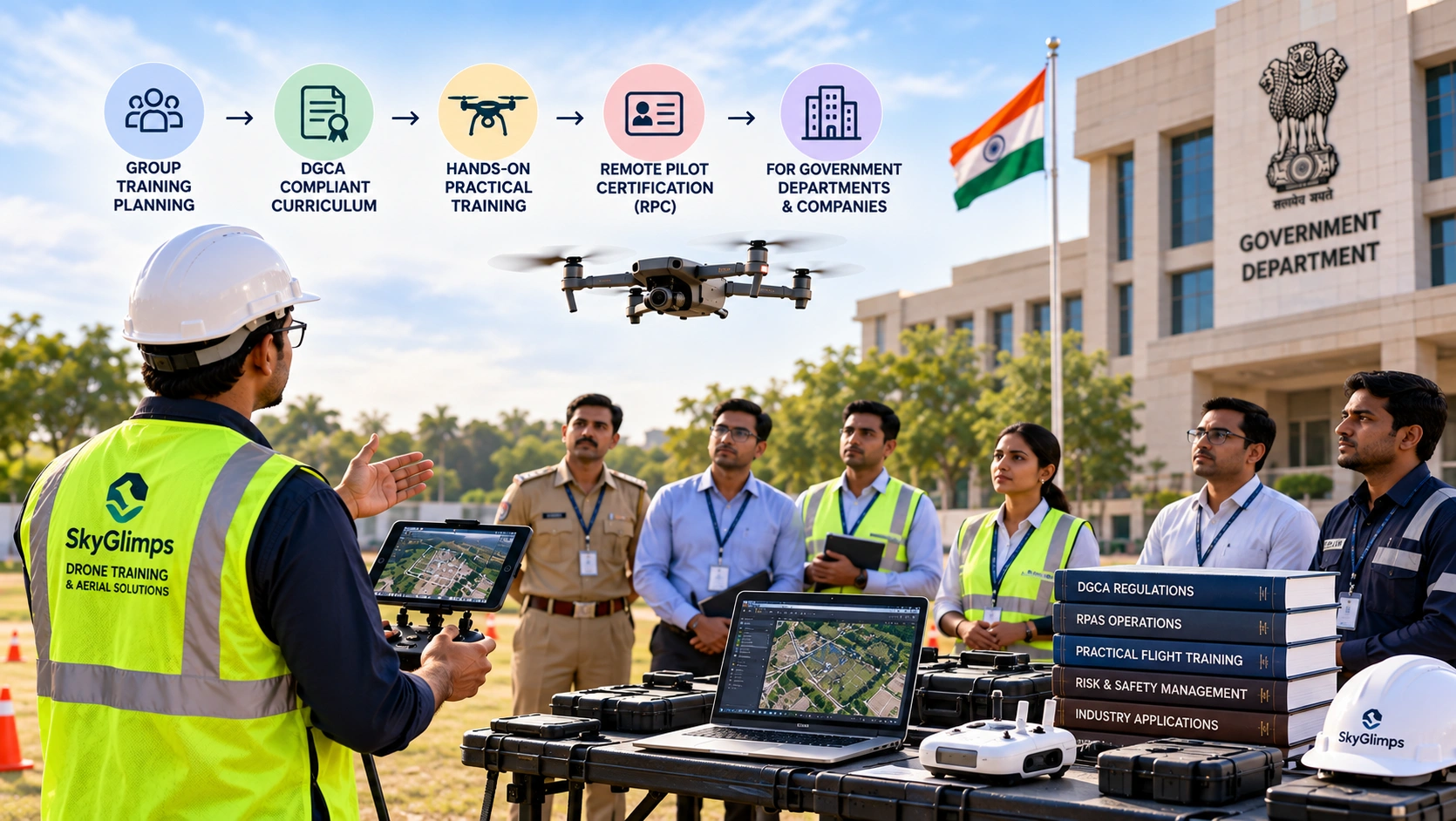
The normal route is to complete the applicable training and assessment through a DGCA-authorised Remote Pilot Training Organisation. DGCA’s training framework states that RPTOs are authorised to conduct training for candidates seeking an RPC and that training requirements are specified according to the relevant category, sub-category and class.
The basic process is:
Step 1: Identify the drone category
Determine which category and class of drone you intend to operate.
Step 2: Check whether an exemption applies
Confirm whether the operation falls under an RPC exemption, such as nano operations or micro operations for non-commercial purposes.
Step 3: Choose an authorised RPTO
Select a Remote Pilot Training Organisation authorised for the applicable training.
Step 4: Complete the prescribed training
Training covers relevant regulatory, technical, safety and practical flying requirements.
Step 5: Complete the required assessment
Candidates must successfully complete the applicable assessment conducted through the authorised training process.
Step 6: Receive the Remote Pilot Certificate
The authorised RPTO follows the prescribed process for issuing the Remote Pilot Certificate. DGCA’s current verification system provides a mechanism for checking RPC details, including the pilot, endorsement and RPTO information.
For individuals looking for professional drone training, Skyglimps provides a DGCA Training Hub covering its drone pilot and specialised training programs.
What Does the Remote Pilot Certificate Cover?
The RPC is linked to the applicable category, sub-category and class of drone training completed by the pilot. This means a pilot should not assume that one certificate automatically authorises every possible type of drone operation.
The DGCA verification page displays endorsement details such as:
- Category of UAS
- Sub-category
- Class
- Training category
- Date of endorsement
- RPTO
- Instruction rating
Pilots should therefore check the endorsement on their certificate before undertaking an operation.
Do You Need an RPC to Fly a Drone for Photography?
It depends on the drone and the purpose of the operation. The RPC exemption is based on the applicable drone category and, for micro drones, whether the operation is non-commercial.
A professional photographer using an eligible drone for paid assignments should not assume that the non-commercial micro-drone exemption applies.
Likewise, simply describing a paid flight as “photography” does not remove the need to comply with the applicable drone regulations.
The safer approach is to determine:
- Drone weight category
- Purpose of operation
- Commercial or non-commercial status
- Applicable RPC requirement
- Airspace requirements
Do Students Need a Drone Licence?
Students who are simply learning under an authorised training programme should follow the training organisation’s approved operating procedures and supervision requirements. Once a student intends to operate drones independently in situations where an RPC is required, the applicable certification requirements must be met.
Professional training should cover more than basic stick control.
A strong training program should develop understanding of:
- Drone regulations
- Airspace
- Flight planning
- Weather
- Risk assessment
- Safety
- Emergency procedures
- Equipment checks
- Practical flying
- Applicable operating limitations
This is particularly important for students who plan to enter professional drone surveying, mapping, inspection, agriculture or infrastructure work.
Can You Start a Drone Career Without an RPC?
You can learn about drones without an RPC, but professional drone operations should be planned around the applicable certification requirements.
For someone considering a drone career, the RPC can form part of the foundation for professional operations where certification is required.
Potential career areas include:
- Drone surveying
- GIS and mapping
- Infrastructure monitoring
- Construction documentation
- Power-line inspection
- Solar inspection
- Agriculture
- Mining
- Industrial inspection
- Aerial cinematography
- Drone operations management
Certification alone, however, does not make someone an expert in these fields. Additional skills are needed for each application.
For example, a survey pilot may need to understand photogrammetry and ground control, while an inspection pilot may need to understand thermal imaging and asset-specific inspection workflows.
What Should You Check Before Flying a Drone in India?
Before every professional flight, use a simple compliance checklist.
Pilot
- Do I hold the applicable RPC?
- Is the RPC valid?
- Does its endorsement cover the drone category?
- Have I completed the required training?
Drone
- Is the drone compliant?
- Is registration/UIN required and completed?
- Does the drone meet applicable certification requirements?
- Is the equipment maintained?
Airspace
- Have I checked the latest Digital Sky airspace map?
- Is the location in a green, yellow or red zone?
- Is additional permission required?
Flight
- Can I maintain the required Visual Line of Sight?
- Are weather conditions suitable?
- Are people and property adequately protected?
- Have pre-flight checks been completed?
DGCA’s current RPC guidance specifically instructs pilots to check airspace, operate within VLOS, maintain safe distances, perform pre-flight checks and comply with the applicable drone requirements.
Common Misunderstandings About Drone Licences in India
“I bought a drone, so I can fly it anywhere.”
Buying a drone does not automatically give you unrestricted flight permission.
“I have an RPC, so my drone is automatically legal.”
Pilot certification and drone compliance are separate matters.
“All drones require an RPC.”
Nano operations and micro drones used for non-commercial purposes are important exemptions.
“A drone licence is still issued by DGCA.”
The current terminology is Remote Pilot Certificate, following the 2022 amendment.
“The certificate lets me fly in red zones.”
It does not. Airspace restrictions and permissions remain separate requirements.
Why Is Proper Drone Training Important?
Drone training is important because professional drone operation involves more than controlling an aircraft. Pilots need to understand regulations, airspace, safety, weather, equipment, emergency procedures and the limitations of the operation.
This becomes particularly important when drones are used near:
- Roads
- Buildings
- Power infrastructure
- Construction sites
- Industrial facilities
- Public areas
- Airports
- Sensitive installations
A trained pilot is better positioned to recognise operational risks before they become problems.
For individuals planning a professional drone career, Skyglimps offers DGCA-certified drone training in Kolkata, along with specialised training pathways for mapping, FPV and other drone applications.
Frequently Asked Questions
For drone operations where pilot certification is required, you need a valid Remote Pilot Certificate rather than a separate drone pilot licence. Nano operations and micro drone operations for non-commercial purposes are exempt from the RPC requirement.
A Remote Pilot Certificate is the current pilot certification under India’s drone regulatory framework. The 2022 amendment replaced the earlier Remote Pilot Licence terminology with the Remote Pilot Certificate issued through authorised remote pilot training organisations.
Pilots operating drones for which the RPC requirement applies need the applicable certificate. Professional and commercial operators should verify their drone category, purpose of operation and any applicable exemptions before flying.
A micro drone does not require an RPC when it is operated for non-commercial purposes under the stated exemption. Commercial micro-drone operations should not be assumed to be exempt.
No. The Drone Rules provide an exemption from the remote pilot certification requirement for operating a nano unmanned aircraft system.
The Drone Rules framework specifies a minimum age of 18 years for eligibility for the remote pilot certification pathway. Class 10 or equivalent education and prescribed training are also part of the eligibility framework.
No. The RPC relates to the pilot, while drone registration and the UIN relate to the unmanned aircraft. Both should be considered separately when applicable.
Understand the Requirement Before You Fly
If you are searching “do I need a drone licence in India,” remember that the current official terminology is Remote Pilot Certificate, not Remote Pilot Licence. The RPC requirement depends on the drone and operation, with specific exemptions for nano drones and micro drones operated for non-commercial purposes.
For professional drone operations, certification is only one part of compliance. The pilot must also consider the drone’s registration and certification requirements, airspace restrictions, safety procedures and the specific conditions of the planned flight.
If you are planning to enter professional drone operations and want structured training, explore the DGCA Training Hub from Skyglimps Technologies to understand the available training pathways and develop the skills required for professional drone operations.